

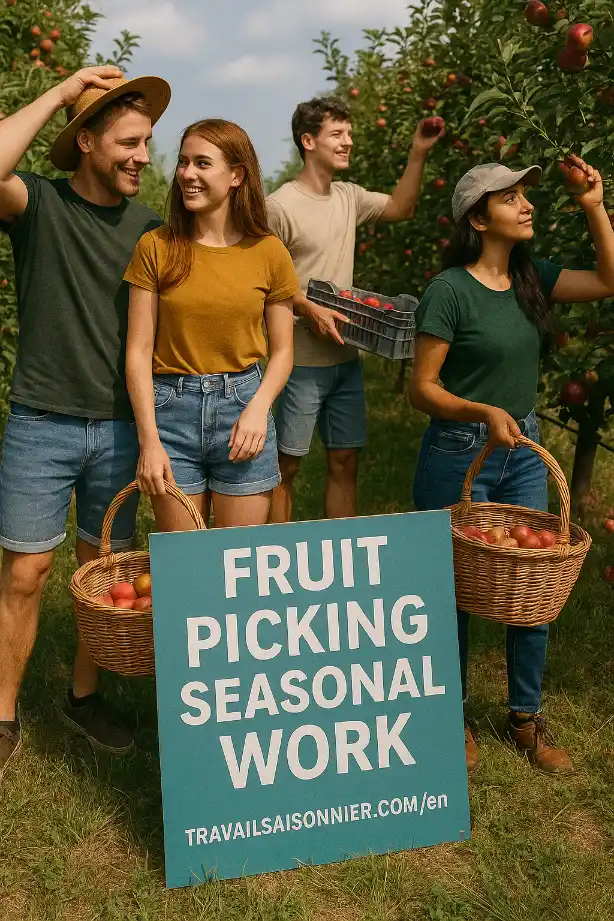
Fruit Picking Seasonal Work in France and Abroad 2026
Fruit picking seasonal work means harvesting fruit, vegetables, grapes, berries or horticultural crops during a limited agricultural period. These jobs are offered by farms, orchards, vineyards, greenhouses, cooperatives and packhouses when crops must be picked, sorted and prepared quickly for sale.
How to Access Picking Jobs
Accessing fruit and vegetable picking jobs depends less on diplomas than on availability, mobility and reliability. Candidates should know when harvests start, where farms recruit, what documents are required, whether housing exists and which countries require work visas before arrival.
What Fruit and Vegetable Picking Involves
Fruit and vegetable picking involves cutting, selecting, carrying, sorting or packing crops without damaging quality. Workers may handle apples, pears, strawberries, cherries, grapes, tomatoes, lettuce, asparagus, melons, peaches, citrus fruit, olives or seasonal vegetables depending on region, crop and climate.
Who Can Apply for Harvest Work
Harvest work attracts students, backpackers, unemployed people, travellers, migrants, farm workers and candidates seeking quick income. Employers mainly look for punctuality, stamina, speed, respect for instructions, teamwork and the ability to work outdoors in changing weather conditions throughout the day.
Picking Jobs in France
In France, picking jobs are common in vineyards, orchards, vegetable farms, berry fields and greenhouses. Regions such as Provence, Occitanie, Nouvelle-Aquitaine, Brittany, Pays de la Loire, Grand Est, Burgundy and the Rhône Valley regularly need seasonal agricultural workers each year.
French Grape Harvest Jobs
Grape harvesting is one of the best-known seasonal jobs in France. Vineyards recruit pickers, carriers, sorters, cellar assistants and drivers. The work is often short, intense and team-based, with recruitment depending on grape maturity, weather conditions and local harvest dates.
Apple and Pear Picking in France
Apple and pear picking usually takes place from late summer into autumn. Orchards need workers able to use baskets, ladders, bins or picking platforms while respecting fruit quality, sorting rules, safety instructions and a steady work rhythm throughout the harvest.
Vegetable Harvesting in France
Vegetable harvesting includes collecting, trimming, washing, grading, packing and preparing crops for market. Jobs may involve lettuce, tomatoes, beans, courgettes, asparagus or field vegetables. The work is repetitive and physical, but often accessible to beginners with good motivation and endurance.
Where to Find French Picking Jobs
Candidates can find French picking jobs through France Travail, agricultural job boards, temporary agencies, growers’ associations, cooperatives, local town halls, vineyards, direct farm applications and seasonal recruitment events. Applying early is important because farms build teams before peak harvest periods.
When to Apply for Harvest Work
Application timing depends on the crop. Strawberries may recruit in spring, summer fruit from May onward, grape harvests around late summer, apples in autumn and vegetables across several periods. Successful candidates contact employers before urgent hiring begins in their region.
CV for Fruit Picking Jobs
A fruit picking CV should be short, practical and precise. It should show exact availability, mobility, driving licence, previous farm experience, physical fitness, languages, teamwork and willingness to start early, work outdoors and stay until the harvest is finished successfully.
Cover Letter for Farm Picking Work
The cover letter should be direct. It should state available dates, preferred region, travel possibilities, housing needs, previous agricultural tasks and motivation for physical outdoor work. Employers want clarity, not long explanations, because harvest recruitment is often fast and practical.
Working Conditions in Picking Jobs
Picking jobs are physically demanding. Workers may face heat, cold, rain, dust, mud, bending, carrying and repetitive gestures. A realistic candidate understands that the job requires hydration, suitable shoes, sun protection, careful movements and respect for safety instructions every day.
Pay and Payment Methods
Pay may be hourly, piece-rate or based on local agricultural rules, depending on the country and employer. Before accepting, workers should ask about gross pay, deductions, overtime, rest days, bonuses, meals, accommodation charges and when wages are paid in full.
Accommodation for Seasonal Pickers
Accommodation can decide whether a picking job is realistic. Some farms provide rooms, dormitories, caravans, campsites or shared housing, while others provide nothing. Applicants should check cost, distance from fields, transport, kitchen access, rules and deposit requirements beforehand carefully in writing.
Transport to Farms and Fields
Many orchards, vineyards and vegetable fields are far from public transport. A driving licence, car, bicycle, shuttle service or shared ride can make the difference. Before accepting, workers should ask how they will reach the workplace every morning on time.
Fruit Picking Jobs in Europe
Across Europe, seasonal picking jobs are available in Spain, Italy, Germany, the Netherlands, Belgium, Ireland, Switzerland, Sweden and other agricultural regions. EU citizens often move more easily, but contracts, housing, wages and local registration rules still matter for each country.
Working in Switzerland
Switzerland offers seasonal farm work in vineyards, orchards, mountain valleys and vegetable farms, but access depends on nationality. EU/EFTA workers benefit from easier procedures, while non-EU workers usually face stricter work authorisation and employer sponsorship requirements before starting employment.
Seasonal Picking in the USA
In the United States, farm employers often recruit seasonal agricultural workers for fruit, vegetables, berries, nurseries and field crops. Foreign workers generally need the correct visa route, and legitimate offers should be linked to real employers and official recruitment channels.
Understanding the H-2A Route
The H-2A programme is the main US route for temporary agricultural workers when employers need seasonal labour. Workers should avoid informal promises and verify job offers, wages, housing, transport and recruitment conditions before sharing documents or travelling to the United States.
Fruit Picking in Australia
Australia is a major destination for backpackers seeking fruit picking, packing, pruning and farm work. Jobs are found in orchards, vineyards, vegetable farms and regional areas, with many travellers using farm work to support Working Holiday visa plans and travel budgets.
Australia and 88 Days of Work
Many Working Holiday visa holders in Australia complete specified regional work, often including agriculture, to qualify for a second year. Candidates should confirm current visa rules, eligible regions, approved work types, payslips and employer records before starting any qualifying work.
New Zealand Harvest Jobs
New Zealand recruits seasonal workers for apples, kiwifruit, grapes, cherries, berries and vegetables. Jobs are common in regions such as Hawke’s Bay, Bay of Plenty, Marlborough, Otago and Nelson, where harvest periods create strong demand for labour each year locally.
Recognised Seasonal Employer Route
New Zealand’s Recognised Seasonal Employer system allows approved employers to recruit overseas workers for fruit, vegetable and grape-growing industries when extra labour is needed. Applicants generally need a genuine job offer from an approved employer before applying for the relevant visa.
Canada and Agricultural Harvest Work
Canada offers seasonal agricultural jobs in fruit farms, vegetable farms, greenhouses, orchards and packing facilities. Access depends on nationality, work permit route and employer. Candidates should verify official requirements, contract terms, housing and provincial labour protections before departure and signing.
Spain, Italy and Mediterranean Harvests
Spain and Italy recruit pickers for citrus fruit, olives, grapes, tomatoes, strawberries, peaches and vegetables. These jobs can be attractive, but workers must check contracts, accommodation, transport, heat conditions, wage rules and whether the employer is properly identified before arrival.
Language Skills for Picking Abroad
Picking jobs are manual, but language skills still matter. English, French, Spanish, Italian or German can help workers understand safety rules, supervisors, payslips, accommodation instructions and emergency procedures, especially when working in international crews far from home and family support.
Documents Needed Before Departure
Before leaving for a foreign picking job, candidates should prepare passport, visa if needed, contract, insurance, employer details, housing address, bank information, emergency contacts and copies of important documents. Digital and paper backups reduce problems during travel and arrival abroad.
Written Contract and Job Details
A written contract or confirmed job agreement should explain employer name, work location, start date, end date, tasks, pay, working hours, accommodation, transport and deductions. Without written terms, workers risk unpaid wages, unsafe housing or sudden cancellation without protection later.
Avoiding Fake Picking Offers
Fake picking offers often promise high pay, free housing, immediate departure and guaranteed visas, then demand fees for documents, training or placement. Candidates should verify employers independently and avoid paying before receiving official, credible and written confirmation from reliable sources.
Legal Work and Worker Protection
Working legally protects seasonal pickers better than informal arrangements. Declared work helps secure wage rights, insurance coverage, accident protection and proof of employment. Undeclared work may leave workers unpaid, unprotected and unable to defend themselves after problems with an employer.
Health and Safety in the Fields
Fruit and vegetable picking requires physical preparation. Workers may bend, lift, climb, carry crates and repeat movements for hours. Gloves, water, sun protection, rest, safe tools and careful lifting reduce the risk of injury during harvest and long working days.
Best Profiles for Picking Jobs
The best picking candidates are reliable, punctual, fast, careful, respectful and able to work in teams. Experience is useful, but many farms also accept beginners who follow instructions, arrive on time and stay for the agreed season until completion fully.
Students and Backpackers
Students and backpackers choose picking jobs to fund travel, studies or language learning. They should check visa rights, exam dates, transport, housing and physical demands before committing, because farm work can be harder than expected during peak harvest and hot weather.
Mobile Seasonal Workers
Mobile seasonal workers often follow harvest calendars from one region to another. They may pick strawberries in spring, grapes in late summer, apples in autumn and citrus in winter, building experience and contacts across farms and countries over several seasons.
How to Get Better Jobs
To access better picking jobs, apply early, be honest about availability, answer quickly, provide references and perform well during the first contract. Good workers are often invited back, recommended to nearby farms or offered longer agricultural tasks after proving reliability.
Budget Before Accepting
Before accepting a job abroad, calculate expected pay, rent, food, transport, insurance, phone, equipment and travel costs. A high wage can become disappointing if accommodation is expensive, hours are irregular or the farm is far from services and shops nearby.
Equipment for Fruit Pickers
Useful equipment includes sturdy shoes, weatherproof clothes, hat, sunscreen, reusable water bottle, gloves and comfortable work trousers. Some farms provide specific tools, but arriving prepared shows seriousness and helps workers start safely from the first day of harvest work outside.
After the Harvest Season
After the season, workers should request payslips, references, certificates and employer contacts for future harvests. This experience can strengthen a CV, prove reliability and open doors to farming, packing, logistics, tourism or further seasonal work abroad next year again later.
Final Guide to Picking Work
Fruit and vegetable picking in France, the USA, Switzerland, Australia, New Zealand and other countries can offer income, travel and practical experience. The safest route is early application, verified employers, legal work status, clear housing and realistic expectations before departure.