Seasonal fruit picking jobs in France: harvest calendar, contract and pay
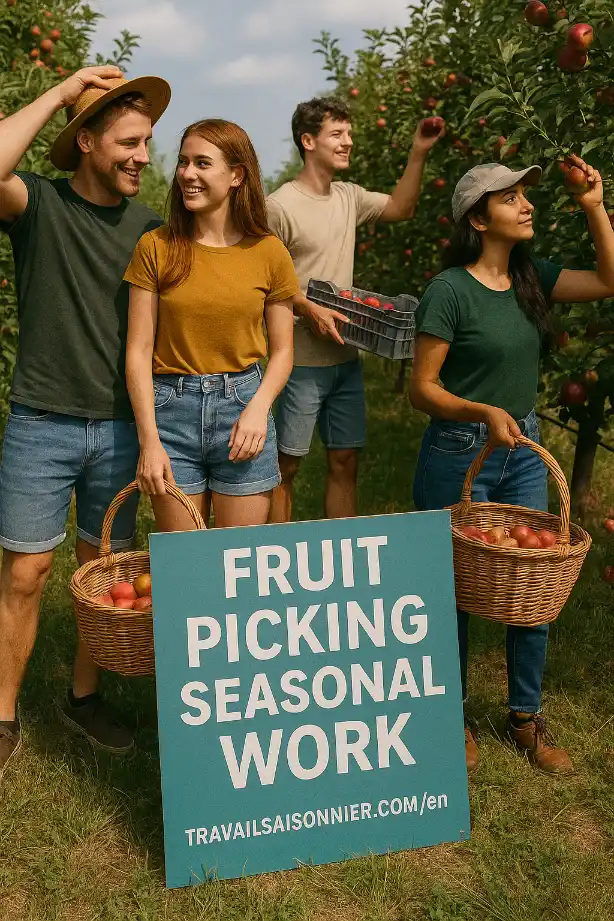
France hires seasonal fruit pickers every year to harvest strawberries, cherries, apricots, peaches, apples and kiwis from April to November, in orchards across the South-West, the Rhône Valley, Provence and the Loire Valley, on a seasonal farm contract.
This page in other languages : Français
What does a fruit picker do day to day?
Pickers remove ripe fruit by hand, grade it by size and place it carefully in crates or large bins. Depending on the crop, the work is done at ground level, under polytunnels or glasshouses, or from ladders and mobile platforms.
Related jobs come with the harvest: packing in fruit stations, weighing, quality sorting, thinning trees in spring and driving farm machinery. These roles can extend a season well beyond the few weeks when a single fruit is ready to pick.
French fruit calendar by crop and region
Soft fruit and strawberries open the season in April, notably in the Dordogne and Lot-et-Garonne. Cherries follow in May and June in Vaucluse, Gard and Ardèche, then apricots, peaches and nectarines in June and July in the Rhône Valley and Roussillon.
Plums and early apples arrive in August, pears in September, and storage apples from the Loire Valley, Limousin and Tarn-et-Garonne continue into October. Kiwis, walnuts and chestnuts close the year in October and November across the South-West.
Who can pick fruit in France?
Citizens of the European Union, the EEA and Switzerland need no permit to work in France. They sign a contract like any French employee and get the same rights, the same minimum wage and the same agricultural social security cover.
Non-EU nationals must hold a document that allows them to work. The grower applies online for a work authorisation; the worker then gets a visa and a multi-year seasonal worker card valid for three years, allowing up to six months of work a year.
Pay and working conditions in 2026
Hourly pay cannot fall below the SMIC, €12.31 gross from 1 June 2026, or below the national collective agreement for agricultural production if that is higher. Seasonal pickers must be paid the same as permanent staff doing an equivalent job on the farm.
A seasonal contract does not carry the usual end-of-contract bonus unless a collective agreement provides one, but a 10% holiday allowance on gross pay is paid at the end. Piece-rate bonuses are allowed, yet pay can never drop below the hourly minimum.
Hours, breaks and overtime
The legal working week is 35 hours, with a maximum of 10 hours a day and 48 hours a week. Overtime is paid 25% extra up to the 43rd hour, then 50% extra, and at least 11 hours of daily rest are required.
The seasonal farm contract
The contract is a written seasonal fixed-term contract, handed over within 48 hours, either for the whole season with a minimum duration or until a set date. It may include a renewal clause giving priority for rehiring by the same grower the following season.
Housing, transport and equipment
Some growers offer shared rooms, mobile homes or camping pitches, free or against a deduction from wages. Orchards are often isolated, so a car or bicycle is frequently essential. The employer supplies any protective equipment required for the job, such as gloves.
How to land a fruit picking job
Growers usually recruit a few weeks before each harvest, sometimes at the last minute depending on ripeness. An organised approach lets you chain several fruits and regions and stay in work for several months in a row.
- Plan a season route following the fruit calendar, from the south northwards.
- Prepare a simple CV stating your available dates, any farm experience and your driving licence.
- Search France Travail seasonal farm vacancies, filtering by department and seasonal contract type.
- Contact cooperatives, packing stations and growers directly by phone or in person.
- Get the hourly rate, minimum duration, working hours and housing terms confirmed in writing.
- If you are a non-EU national, make sure the work authorisation is issued before you travel.
- Keep your payslips and work certificate to claim your rights after the season.
Budget and documents at a glance
This table sums up the main amounts and documents to check. Housing and transport costs vary considerably by region and depending on whether the grower provides accommodation for the season.
| Item | Value or document | Good to know |
|---|---|---|
| Minimum wage | €12.31 gross per hour (June 2026) | SMIC or higher collective agreement rate |
| Holiday allowance | 10% of gross pay | Paid with the final wages |
| Employment contract | Written seasonal contract | Handed over within 48 hours |
| Non-EU residence permit | Seasonal worker card | €150 in fees for the first card |
| Accommodation | Free, deducted or rented | Insist on written terms |
| Transport | Car, bike or car-sharing | Orchards rarely served by public transport |
Common pitfalls in the fruit season
The same mistakes come up every year for first-time pickers and seasoned workers alike. Most concern pay, missing contracts and housing arrangements.
- Being paid per crate with no record of actual hours, which can mean earning below the SMIC.
- Accepting undeclared work with no MSA accident cover.
- Paying a middleman who promises a job or a visa.
- Arriving too early: a harvest delayed by weather can leave you several days without pay.
- Underestimating summer heat: water, a hat and regular breaks are essential.
Fruit picking in France: FAQ
Below are answers to the questions applicants ask most often. For a specific situation, the MSA and the departmental agricultural labour inspectorate are the competent bodies for farm workers.
Can you be paid by the amount you pick?
A productivity bonus can be added to wages, but hourly pay cannot fall below the SMIC or the collective agreement minimum. The employer must record actual hours, either through posted team schedules or an individual register attached to each payslip.
How long does a picking season last?
A cherry or apricot harvest often lasts three to six weeks, apples two to three months. By chaining strawberries, summer fruit, apples and kiwis, some seasonal workers stay employed from April to November across several regions.
Can students pick fruit in France?
Yes. Fruit picking is a very common summer job for students aged 18 and over. Young people aged 14 or 15 may only do light work during school holidays, with shorter hours and prior notification to the labour inspectorate.
Should you secure housing before arriving?
Strongly advised. Campsites and rentals in fruit-growing areas fill up quickly in summer. A grower who provides housing must declare it and meet set standards, and any conditions or wage deductions should be stated in writing.
Where to find these jobs
- France Travail – Seasonal farm work — Harvest calendar and access to seasonal farm vacancies from the French public employment service, region by region.
- France Travail – Seasonal jobs near you — Regional search for seasonal vacancies and a list of specialist job sites, including agricultural employment boards.
- EURES – European job mobility portal — EU public employment network with vacancies in France, EURES advisers and mobility support for Europeans.
Official and legal references
- Service-Public – French minimum wage (SMIC) — Official 2026 hourly and monthly minimum wage and the related Labour Code provisions.
- French Ministry of Economy – Hiring seasonal workers — Seasonal contract rules: mandatory clauses, minimum duration, holiday allowance and renewal clause.
- Service-Public – Seasonal worker residence card — Employer and worker procedures for non-EU nationals doing seasonal work of up to six months a year.