

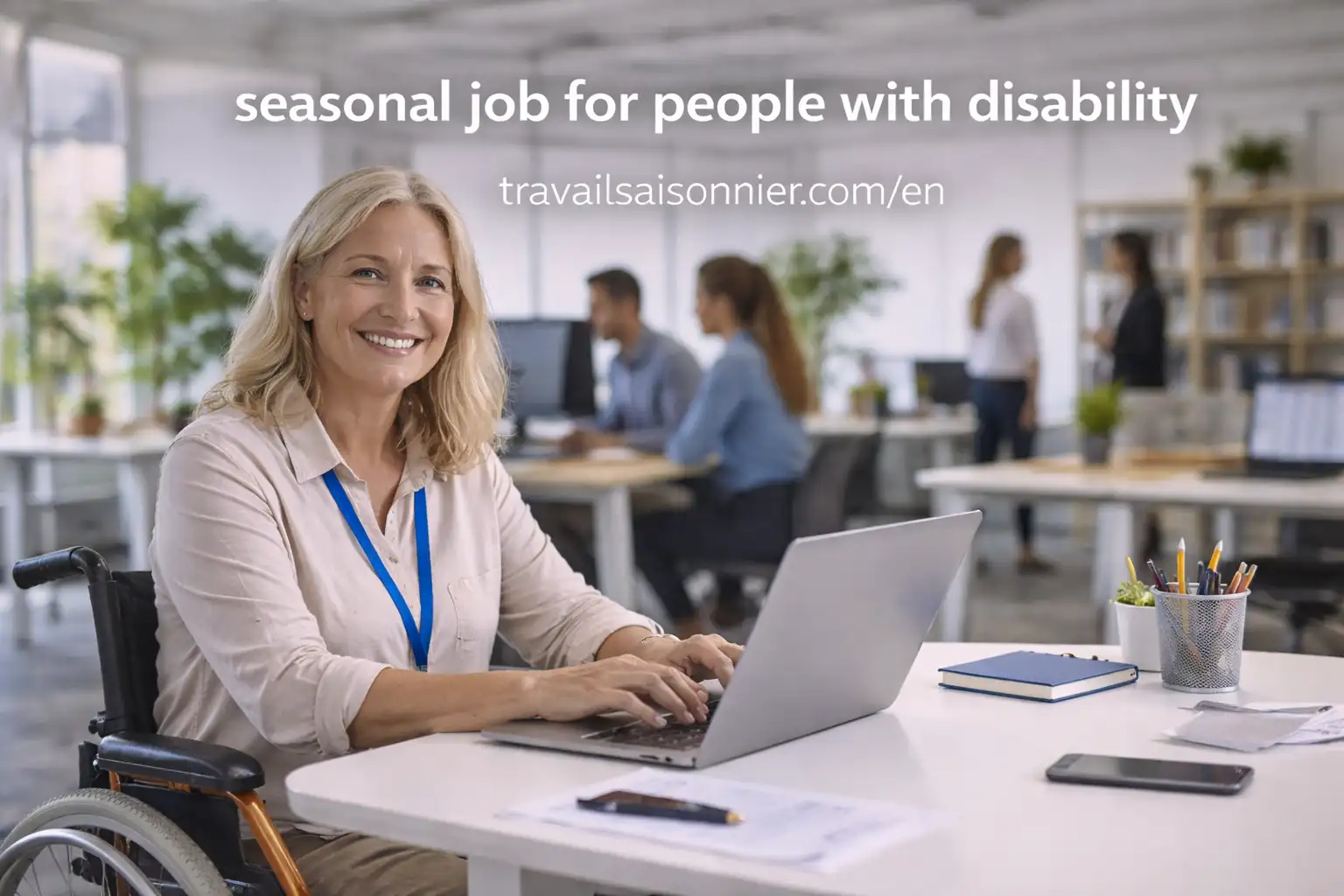
SEASONAL WORK FOR PEOPLE WITH DISABILITY 2026
A seasonal job for people with disability is a peak-demand, time-limited contract designed to match the employer’s seasonal workload while ensuring that the role, environment, and support measures can be accessible. The seasonal and disability dimensions are inseparable: the job must be doable within a short timeframe and realistic with appropriate accommodations, without sacrificing safety, dignity, or performance expectations.
Understanding a seasonal job for people with disability
What “seasonal job for persons with disability” means?
The seasonal job for people with disability covers many seasonal roles across tourism, retail peaks, events, light logistics, customer support, and some agricultural packaging or sorting. The key is not the sector alone but the task design: predictable duties, reasonable pace, safe ergonomics, clear instructions, and a supervisor trained to manage inclusive workflows during busy periods.
How seasonal hiring typically works when accessibility is considered for disabled seasonal workers
The functioning of seasonal recruitment is often fast because employers must staff up quickly for a defined season. For candidates with disabilities, the process works best when job descriptions include task details (standing time, lifting, noise levels), schedules, and the accessibility of the site, so both sides can align early and avoid last-minute mismatches that are common in rushed seasonal hiring.
A good inclusive seasonal employer focuses on “essential tasks” and then adapts how work is done: assistive tools, adjusted workstation height, flexible break planning, accessible transport or parking, quiet spaces, or adapted training materials. These measures can improve performance for everyone, especially during high-season pressure when clarity and safety reduce errors and fatigue.
Typical seasonal roles for people with disability that can be adapted
Common seasonal roles that can be suitable—depending on the individual and the workplace—include reception and guest services, ticketing, retail assistance, cashiering with adapted seating, event check-in, call or chat support, light packing and quality control, administrative support, and digital tasks such as content moderation or customer follow-up during peak periods. Physical roles can also be possible when risks are controlled and tools are provided.
The job match should be practical: consider mobility needs, fatigue patterns, sensory environment (noise, crowds, bright lights), manual dexterity, and commuting constraints. In seasonal tourism or events, crowd intensity can be a challenge; in warehouses, standing and repetitive movements may be the main barrier unless tasks are redesigned or rotated.
Specific accommodation for people with disability and travel: accessibility must be verified, not assumed
Some seasonal jobs include accommodation, especially in resorts, remote attractions, or agricultural areas, but accessibility varies widely. Candidates should confirm step-free access, bathroom setup, room sharing rules, proximity to work, and whether medical or assistive needs can be supported. “Accommodation provided” is only an advantage if it is safe and usable for the worker.
Without accommodation, local seasonal work can be preferable when it reduces logistics and allows established routines and support networks. For those who travel, transport planning matters: accessible public transit, employer shuttles, parking, and realistic walking distances. A great seasonal offer can become unworkable if daily mobility is underestimated.
Visa and legal eligibility in 2026 for international disabled candidates
For cross-border seasonal work in 2026, visa and right-to-work rules apply the same way, and disability accommodations do not replace legal eligibility. Candidates should verify whether a destination allows short-term seasonal work, whether employer sponsorship exists for the role, and whether medical insurance or documentation requirements could affect entry. Any intermediary promising “guaranteed visa + seasonal job” should be treated with caution.
Advantages for persons with disability when working in season: inclusive income, skills, and social participation
The advantages of a seasonal job for people with disability include income, updated work experience, confidence, and social participation, often in a structured short period that can be easier to plan than open-ended roles. Seasonal work can also be a way to test a new sector or accommodation setup, build references, and identify the kinds of adjustments that work best for future roles.
The comparator below lists real organisations and platforms that may publish inclusive seasonal opportunities, including job boards, public employment portals, disability-focused employment services, and staffing agencies. Use filters for country, job type, accommodation option, and contract duration in weeks, then compare recruitment criteria, accessibility and visa notes, conditions, and direct links.
• The best matches combine clear tasks + realistic adjustments (ergonomics, breaks, tools, training format).
• “Accommodation provided” must be checked for accessibility (stairs, bathroom, room sharing, distance).
• International plans in 2026 still require right-to-work/visa; verify rules before spending money on travel.
Seasonal jobs by profile
Explore seasonal job opportunities for students, teachers, retirees, teenagers, foreigners, disabled workers and nomadic travelers.