Ski resort jobs: winter season roles, pay and accommodation
A ski resort job is a seasonal contract linked to the winter opening of a ski area, in lift operations, ski hire, hotels, restaurants, childcare or instruction, typically running from early December to late April in the northern hemisphere.
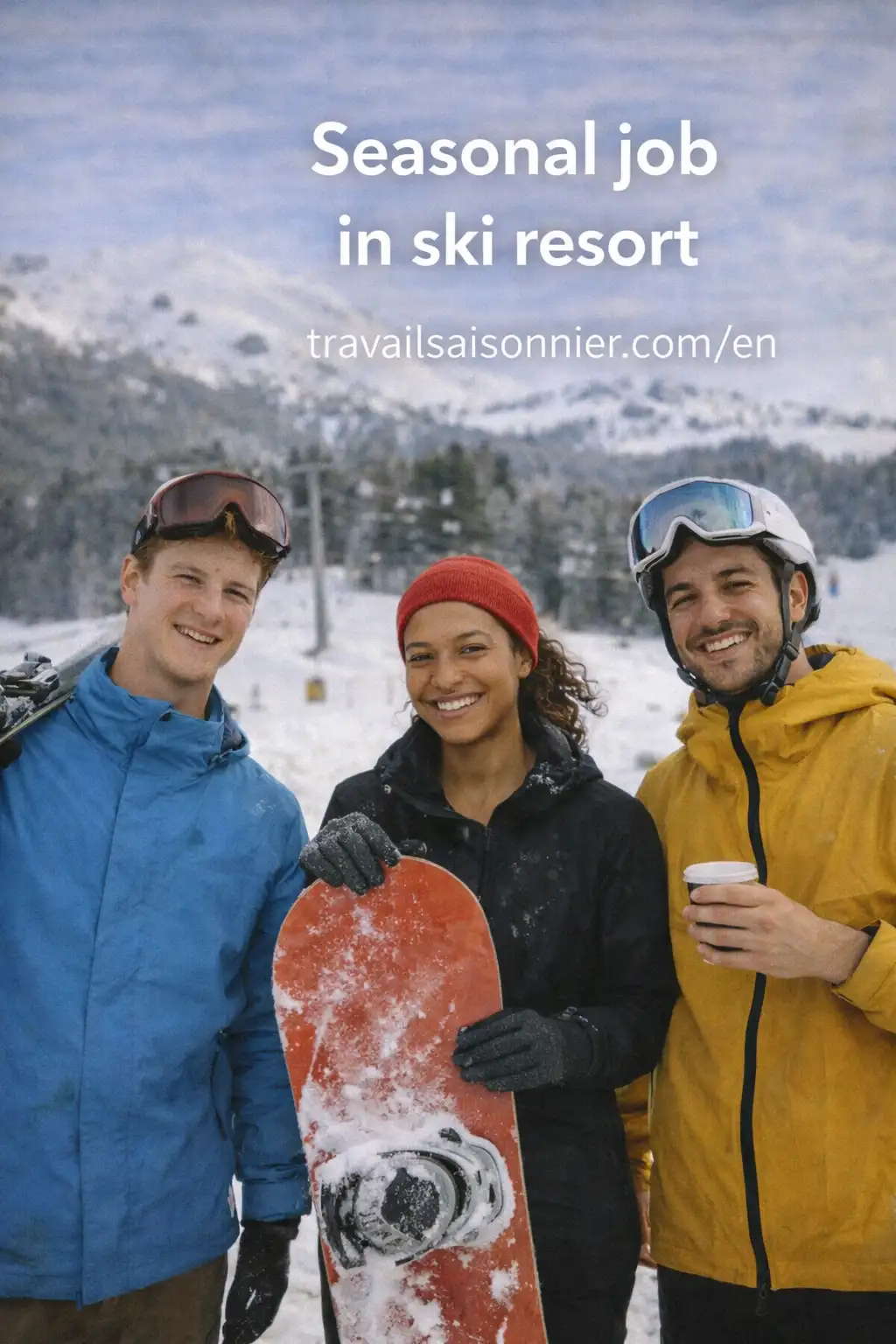
This page in other languages : Français
What jobs does a ski resort offer?
Lift companies hire lift attendants, chairlift operators, ticket sellers and ski patrollers. Ski shops need technicians for rental and servicing, and ski schools recruit qualified instructors. Grooming machine drivers and snowmaking teams work mostly at night to prepare the slopes.
Hotels and restaurants employ the largest numbers: waiting staff, kitchen porters, chefs, receptionists, housekeepers and chalet hosts. Resorts also need nursery staff, shop assistants, shuttle drivers, maintenance workers for residences and advisers in tourist offices.
Main ski regions that hire
In France, the Tarentaise valley with Val d’Isère, Tignes, Courchevel, Méribel and Val Thorens, plus Chamonix, Morzine and Alpe d’Huez, offer the most vacancies. Switzerland’s Verbier, Zermatt and St. Moritz, and Austria’s Tyrol and Salzburg regions, hire thousands of seasonal staff.
Italy’s Dolomites, Andorra and the Spanish Pyrenees complete the European picture. In North America, Whistler, Banff and Colorado or Utah resorts recruit internationally, and Japan’s Niseko and Hakuba attract English-speaking staff on Working Holiday visas.
Large high-altitude resorts hire the most because they open longest and attract international guests. Smaller family resorts in the Pyrenees, Jura or Vosges offer shorter seasons, but lower living costs and a quieter atmosphere that suits first-time seasonal workers.
Winter season calendar
Hiring opens in September and peaks in October and November. Contracts usually start in late November or early December with training before opening, and end between mid-April and early May. School holidays in February are the busiest weeks of the season.
Southern-hemisphere ski seasons
New Zealand’s ski fields operate from June to September in the Central Plateau, Canterbury and Central Otago, especially around Queenstown and Wanaka. Australia’s resorts in New South Wales and Victoria follow similar dates, allowing experienced staff to work two winters a year.
Who can work in a ski resort?
EU, EEA and Swiss citizens can work freely in French, Italian, Austrian and Swiss resorts. In Switzerland, under three months of work per calendar year only requires an online notification, and longer contracts lead to an L short-stay permit valid for the contract.
Non-EU nationals need a work permit sponsored by the employer, which is difficult to obtain for unskilled resort jobs in Europe. Since 2021, British workers are affected too, which has sharply reduced chalet host jobs offered by UK tour operators in the Alps.
Working Holiday visas for ski seasons
Young people from partner countries, usually aged 18 to 30 and sometimes up to 35, can work ski seasons in Canada, New Zealand, Australia and Japan on Working Holiday visas. Canadian quotas fill quickly, so applications should be submitted well before the season starts.
Qualifications required for some roles
Ski and snowboard instructors need a recognised national qualification; in France, teaching for pay requires a state diploma or supervised training. Ski patrollers need a specific first-aid and patrol certificate, and grooming or lift technicians need operator training provided by the resort.
Age and physical fitness
Most resort jobs require applicants to be at least 18. Cold, altitude and early starts call for good fitness, especially for outdoor lift and slope staff. Indoor hospitality jobs are less exposed but involve long shifts during holiday weeks.
Pay, hours and perks
Pay follows the national minimum wage or sector agreements. France’s Smic is 12.31 euros gross per hour since 1 June 2026, and New Zealand’s adult minimum wage is 23.95 dollars per hour from 1 April 2026. Swiss and Austrian hospitality agreements usually pay more.
Weekly hours often exceed 39 during school holidays, with split shifts in restaurants and early starts on the lifts. A free or discounted season ski pass is a common perk, worth several hundred euros or francs over the winter.
Lift and slope staff are usually covered by specific collective agreements in France, Austria and Switzerland, with pay grades for technical posts. Ski instructors are often paid per hour taught or as self-employed workers, so their earnings vary widely with bookings and snow conditions.
Accommodation: the biggest challenge
Rents in ski resorts are among the highest in each country, and local housing is often booked by tourists. Many employers house staff in shared studios or staff blocks, with rent deducted from wages. Jobs with housing included are by far the most sought-after.
| Item | Typical range or rule |
|---|---|
| Hourly minimum | 12.31 EUR gross (France, June 2026), 23.95 NZD (NZ, April 2026) |
| Staff housing | Free or deducted monthly from pay |
| Private shared rental | Often several hundred per month per person |
| Season ski pass | Often free or discounted for staff |
| Cold-weather gear | 100 to 300 for clothing and boots |
| Start-up budget | One month of living costs before the first payday |
The first pay arrives only after a full month of work, often in early January, while deposits, groceries at resort prices and fuel must be paid from day one. Budgeting one month of costs avoids a difficult start.
How to land a ski season job
- Shortlist two or three resorts based on budget, access and size.
- Apply from September to lift companies, hotels, ski shops and ski schools.
- Attend seasonal job fairs held in Alpine valleys in October and November.
- Prioritise jobs with staff accommodation or secure housing before signing.
- Check pay, contract length, hours and perks such as the ski pass in writing.
- Arrange insurance, winter tyres or chains and a one-month start-up budget.
Mistakes and scams to avoid
- Arriving in December without accommodation when everything is booked.
- Paying a rental deposit to a private individual without a viewing or contract.
- Accepting a live-in job without knowing room-sharing and deduction details.
- Underestimating the cost of living at altitude.
- Ignoring the end-date clause, which may depend on snow conditions.
Ski resort jobs FAQ
These answers cover the questions most often asked by people preparing a first winter in the mountains, as well as experienced seasonal workers who want to change resort, work in Switzerland or chain a European winter with a southern-hemisphere season.
What happens if there is not enough snow?
Poor snow can delay opening or bring closing forward. In France, seasonal contracts without a fixed end date include a guaranteed minimum duration, which protects workers when the season is cut short. Check this clause before signing any contract.
Can I ski during the season?
Yes. Most seasonal staff ski on days off or during split-shift breaks, and the staff ski pass is a major recruiting argument. During school holidays, however, long shifts leave little free time, so the best skiing days are often in January and March.
Will I be rehired next winter?
Often, yes. Lift companies and hotels prefer to rehire reliable seasonal staff, and some collective agreements give returning workers priority. Telling your manager before the season ends and confirming dates early in summer improves your chances.
Do I need to speak the local language?
In large international resorts, English is often enough for hospitality roles, but the local language helps greatly in lift operations, ski schools and front-desk jobs. Basic French, German or Italian improves hiring chances and day-to-day life in the resort.
Where to find these jobs
- Hogapage – Hotel jobs in Tyrol — Specialised hotel and restaurant job board with many vacancies in Tyrolean resorts, from waiting staff to reception.
- Work and Income – Finding seasonal work — New Zealand public service guide to seasonal work by type, region and month, from orchards and vineyards to ski fields.
- EURES – Jobseekers — European employment network: vacancies across the EU/EEA, EURES advisers, online job fairs and mobility support, mostly free of charge.
Official and legal references
- L permit for EU/EFTA nationals – Swiss State Secretariat for Migration — Swiss short-term permit for EU/EFTA citizens, and online notification for less than three months of work per calendar year.
- French minimum wage (Smic) 2026 – Service-Public.gouv.fr — Official French minimum wage: 12.31 euros gross per hour and 1,867.02 euros gross per month for a 35-hour week.
- New Zealand minimum wage 2026 – Employment New Zealand — Adult minimum wage of 23.95 New Zealand dollars per hour from 1 April 2026, before tax.