Grape harvest jobs in Italy: wine regions, timing and working conditions
A grape picker in Italy is a seasonal farmworker hired for the vendemmia, the wine grape harvest, usually between mid-August and late October in areas such as Prosecco, the Langhe or Chianti, on a fixed-term contract governed by the agricultural collective agreement.
This page in other languages : Français · Italiano
What is the Italian vendemmia really like?
Italy grows vines in every region, and hand harvesting is still common on hillsides and for premium wines. Estates, cooperative wineries andagricultural service firms hire picking teams for two to six weeks, often recruiting the same people year after year.
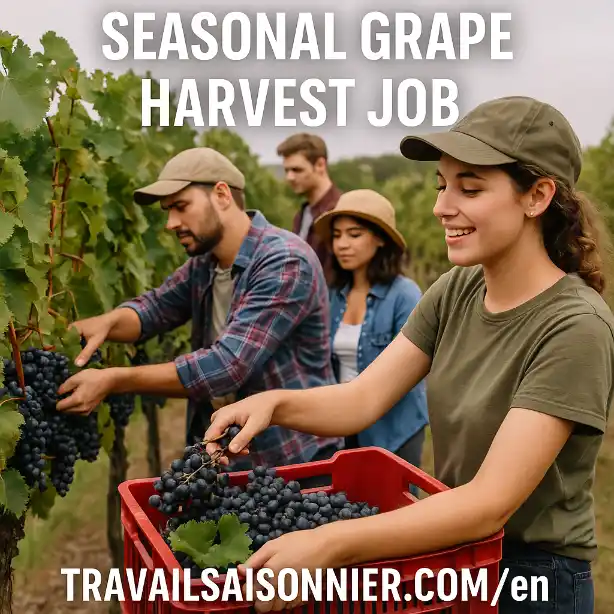
Pickers cut bunches with secateurs, drop them into small crates and carry them to the trailer. Other roles include crate carrier, tractor driver,sorting-table worker and cellar hand helping with destemming and pressing once the grapes reach the winery.
Wine regions that hire the most pickers
- Veneto: Conegliano-Valdobbiadene Prosecco and Valpolicella, late August to October.
- Piedmont: Langhe, Roero and Monferrato, up to late-ripening nebbiolo in October.
- Tuscany: Chianti, Montalcino and Montepulciano, September to mid-October.
- Lombardy: Franciacorta, where sparkling-wine grapes ripen in August.
- Trentino-South Tyrol and Friuli: white varieties in September.
- Sicily and Apulia: lowland picking from August, Etna in October.
A harvest that moves from south to north
The first cuts start in Sicily and Franciacorta in August, for sparkling-wine bases. Most regions peak in September, and late varieties such asnebbiolo or aglianico are picked until the end of October, so a flexible worker can string several harvests together.
Hard work, but open to beginners
No qualifications are required. Expect long days bent over the vines, September heat and sometimes very steep slopes, as in Valdobbiadene orthe Cinque Terre. Estates prefer pickers who can stay for the whole harvest rather than leaving halfway through.
Who can work the grape harvest in Italy?
Citizens of the European Union, the EEA and Switzerland can pick grapes without a work permit. They need a codice fiscale, valid ID and, forstays longer than three months, registration with the local town hall where they are living.
The Decreto Flussi for other nationalities
Non-EU citizens, including British and American nationals, must be hired through the Decreto Flussi. For 2026 there are 88,000 seasonal farm andtourism places out of 164,850 entries. Employers file agricultural requests on the 12 January click day.
The seasonal nulla osta is issued about twenty days after a quota is assigned. The employer then confirms the hire within seven days, and theresidence contract is signed within eight days of the worker arriving in Italy.
How long can you stay?
A seasonal permit never exceeds nine months in a twelve-month period, which is enough to combine the grape harvest with other crops. A multi-yearauthorisation can cover several seasons for a picker who returns to the same wine estate.
Caporalato also reaches the vineyards
In some areas illegal middlemen, the caporali, recruit teams, keep part of the pay and charge for transport. Law 199/2016 makes thisa criminal offence for both the gangmaster and the employer who benefits, including through sham service companies.
Pay and working conditions for grape pickers
Italy has no statutory minimum wage. Grape pickers are covered by the national collective agreement for agricultural and nursery workers and byprovincial agreements, which set hourly rates by province and grade, plus a supplement covering holiday entitlements.
Working days, breaks and overtime
The standard week is 39 hours, but picking is concentrated on dry days with very early starts. Overtime, Sunday work and public holidays attractthe premiums set by the agreements, which should appear clearly on the payslip at the end of the month.
Accommodation, meals and budget
Some Tuscan or Piedmontese estates house their pickers and provide lunch, but many recruit locally with no accommodation. The table below listswhat to check and the usual costs before committing to an Italian grape harvest season.
| Item | Practical guide |
|---|---|
| Documents | Passport or ID, codice fiscale, IBAN for payment |
| Contract | Written fixed-term farm contract, reported the day before |
| Pay | Provincial hourly rate plus holiday supplement |
| Accommodation | Rarely included; agree in writing |
| Meals | Lunch sometimes provided on small estates |
| Kit | Secateurs often lent, gloves, closed shoes, rain gear |
Steps to secure a harvest job
Estates start hiring in June or July and the best places go quickly. The sequence below suits EU citizens; non-EU workers must begin before theJanuary click day, with an employer already lined up and willing to file the request.
- Choose a wine area that matches your available dates.
- Write a short CV in Italian or English stating how long you can stay.
- Contact cooperative wineries, wine consortia and the local job centre.
- Search EURES and farm union job boards.
- Get a written contract stating pay, hours and accommodation.
- Obtain a codice fiscale and provide a bank account.
- Check that the hire was reported and keep a record of hours worked.
Pitfalls to avoid during the vendemmia
Because the harvest is short, undeclared work is common. Before leaving home, check who the real employer is, how hours will be counted and whenwages will be paid, ideally by traceable bank transfer rather than in cash at the end of the season.
- Agreeing to cash pay with no payslip.
- Joining a team run by a middleman who collects your wages.
- Paying a team leader for transport to the vineyards.
- Travelling without written confirmation of dates and housing.
- Underestimating heat, hydration and sun protection.
How long does the grape harvest last in Italy?
An average estate picks for two to four weeks, while a cooperative or large appellation can employ teams for six weeks. By combining regions,a mobile picker can work from mid-August to the end of October, starting in the south and moving north.
Do I need experience to pick grapes?
No, cutting technique is learnt in a morning. Experience matters for team leader, tractor driver or cellar roles, which sit higher on the payscale and are usually offered to seasonal workers who return to the same estate every year.
Can an international student pick grapes while studying in Italy?
EU students can work freely. Non-EU students holding a study residence permit may work up to 20 hours a week on average, capped at 1,040 hoursa year, as long as the job is properly contracted and reported.
Does harvest work count towards unemployment benefit?
Fixed-term farmworkers can claim INPS agricultural unemployment benefit if they build up enough declared working days over two years. A singleshort grape harvest is usually not enough on its own to qualify for the allowance.
Can I pick grapes on a working holiday visa?
Yes, young people from countries that have a working holiday agreement with Italy may take temporary jobs, harvest work included. Age limits andlength of stay depend on the agreement, and the visa must be obtained from an Italian consulate before departure.
Where to find these jobs
- EURES – job search help — Find a job tool with country and occupation filters to spot grape picker and vineyard worker vacancies.
- EURES brochure from Regione Piemonte — Overview of the EURES network and advisers, published by the region home to the Langhe and Roero vineyards.
- EURES – services for jobseekers — European public employment services: advice, living and working conditions, and recruitment fairs.
Official and legal references
- Guide to Decreto Flussi 2026-2028 visas — Legal overview of multi-year seasonal authorisations, nulla osta deadlines, residence contracts and 2027 dates.
- Decreto Flussi 2026 DPCM: quotas — Breakdown of the 164,850 entries for 2026, including 88,000 seasonal farm and tourism places, and click day calendar.
- Integrazione Migranti – Decreto Flussi — Italian ministries’ portal on entry quotas and procedures for non-EU workers.