

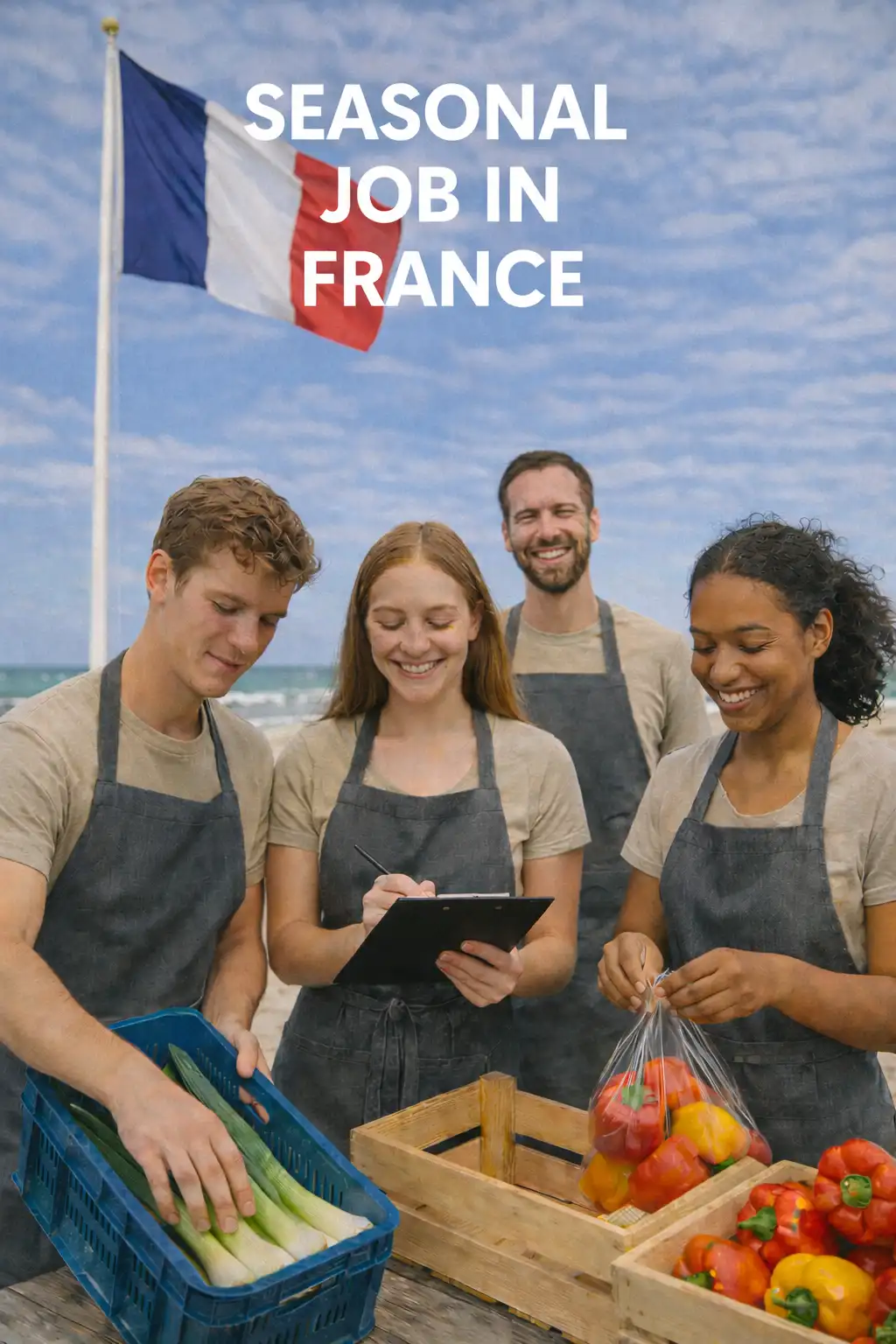
FRANCE SEASONAL WORK 2026
In France, a seasonal job in 2026 is a time-limited job in France that exists because demand peaks at specific periods of the year, such as summer tourism on the coast, winter sports in the mountains, agricultural harvest windows, or event-driven and retail surges, which means the “season” and “France” must be understood together: short contracts, strong regional differences, and practical constraints like housing and transport during peak weeks.
How does it work with a seasonal job in France in 2026
What is important with a seasonal work in France in 2026 and the reality
In practice, seasonal job in France opportunities in 2026 commonly include hospitality and tourism (hotels, restaurants, resorts), campsites and outdoor recreation, agriculture and food processing (picking, packing, vineyards), logistics and warehousing, retail customer service, and event staffing, with contracts often expressed in weeks and designed to reinforce permanent teams for a defined period.
Functioning: how seasonal work in France is recruited and organised
The functioning of a seasonal job in France is calendar-driven: employers plan around known high seasons and recruit quickly, often prioritising candidates who can commit to the full period, start on the exact date, and cope with intensive schedules that may include weekends, split shifts, or high-volume days, especially in hospitality, campsites and tourism zones.
Recruitment channels typically combine public employment services, specialised agricultural networks, general job boards, temporary employment agencies and direct employer career pages; because the job is short, clarity matters—role description, location, working hours, pay basis, and any accommodation terms should be explicit before accepting.
Accommodation with seasonal jobs in France: the key factor in tourist regions
For a seasonal job in France in 2026, accommodation can be decisive in high-demand areas (coastal summer hotspots and ski resorts), where the same job may be financially workable only if the employer provides housing or helps you access it; if housing is included, candidates should verify written details such as cost deductions, shared-room rules, distance to work and end-of-contract housing dates.
Without accommodation, seasonal work can still be a good option for locals or candidates with housing already secured, but for mobile workers it requires a realistic plan for rent and commuting, because peak-season housing scarcity can affect safety, budget and the ability to complete the contract.
France season jobs: rights, eligibility and practical compliance in 2026
Seasonal jobs in France operate under French labour rules for contracts, pay, working time and rest, but practical compliance still depends on the employer’s organisation; candidates should keep written proof of the offer, employer identity, work address and housing conditions, because short contracts leave little room to fix misunderstandings once the season has started.
Eligibility can also matter, especially for non-EU candidates who may need a right-to-work pathway; because seasonal recruitment is time-sensitive, any delay with documents can break the plan, so a responsible approach is to confirm eligibility before committing to travel or housing costs.
The role of seasonal jobs for candidates, french employers and regions
For candidates, a seasonal job in France in 2026 is a fast route to short-term income and practical experience, often improving teamwork, pace, customer handling, language confidence and physical endurance; for employers and regions, seasonal hiring is essential to maintain service quality and production during peak periods, supporting tourism, agriculture and local economic activity.
The comparison tool below turns these ideas into a practical search: filter by French region, job type, accommodation option and contract duration in weeks, then compare real providers (public services, job boards, agencies and direct employers), their recruitment criteria, typical conditions and direct links.
• Coastal summer regions and mountain resorts: housing can decide if the season is feasible.
• Agriculture: short but intensive windows — check physical demands and transport.
• Safety: avoid “placement fees”; keep everything in writing (offer, address, housing terms).
Seasonal jobs by country
Compare seasonal job opportunities across Europe, North America, the Middle East, Africa, Asia and Oceania.
- SEASONAL JOB
- SWITZERLAND SEASONAL JOB
- FRUIT PICKING SEASONAL JOB
- ITALY SEASONAL JOB
- USA H-2B SEASONAL JOB
- AUSTRALIA SEASONAL JOB
- BELGIUM SEASONAL JOB
- CANADA SEASONAL JOB
- CHINA SEASONAL JOB
- DUBAI UAE SEASONAL JOB
- FRANCE SEASONAL JOB
- GERMANY SEASONAL JOB
- INDIA SEASONAL JOB
- IRELAND SEASONAL JOB
- MEXICO SEASONAL JOB
- MOROCCO SEASONAL JOB
- NETHERLANDS SEASONAL JOB
- NEW ZEALAND SEASONAL JOB
- PORTUGAL SEASONAL JOB
- SOUTH AFRICA SEASONAL JOB
- SPAIN SEASONAL JOB
- THAILAND SEASONAL JOB
- TURKEY SEASONAL JOB
- UK SEASONAL JOB
- USA SEASONAL JOB