

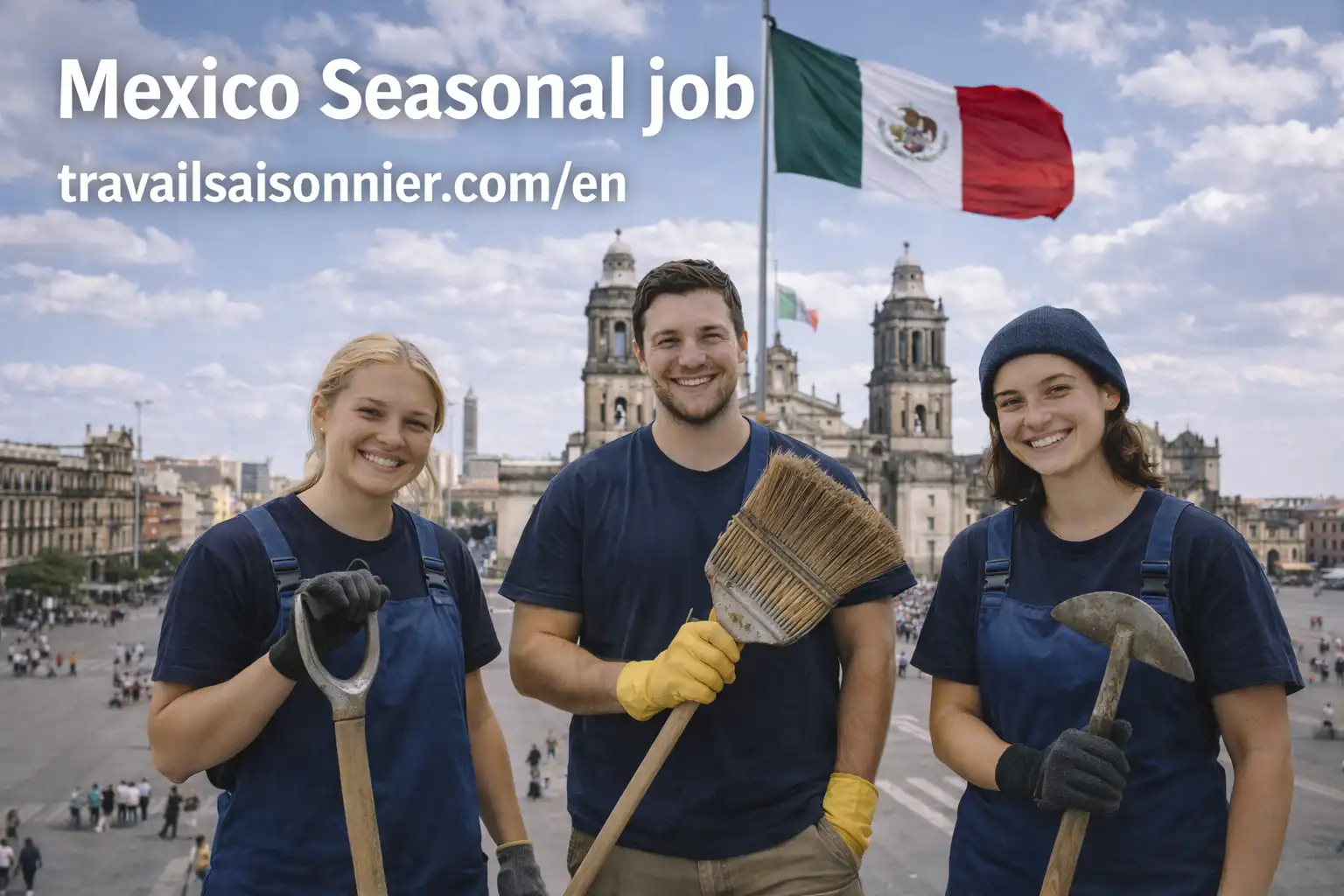
MEXICO SEASONAL WORK 2026
A seasonal job in Mexico in 2026 is a time-limited role created by predictable peaks in Mexican demand (tourism high season, harvest windows, holiday retail, events, logistics surges), where “seasonal” and “Mexico” work together: the start dates, the work rhythm, and the location are driven by local calendars, climate, and regional economies rather than by a permanent staffing model.
How a seasonal job in Mexico works in 2026
What seasonal job in Mexico in 2026 means as one combined concept
In practice, seasonal work concentrates in coastal and resort destinations during peak travel months, in agriculture and food production around harvest and packing cycles, and in cities for retail and events; this means a candidate’s net advantage depends on where the job is (state), how long it lasts (weeks), and whether the employer provides housing or expects daily commuting.
How recruitment and day-to-day work typically function in Mexico
The functioning of a seasonal job in Mexico in 2026 is usually fast and practical: employers recruit quickly, shortlist candidates who can start immediately, and provide short onboarding focused on safety, service standards, hygiene, or productivity, because seasonal peaks do not allow long training cycles.
Daily schedules depend on the sector: hospitality roles often involve split shifts and weekend work, warehouses emphasize shift discipline and pace, agriculture follows weather and daylight, and event-related jobs can be intense but short; across all formats, reliability and compliance with procedures matter because teams are assembled quickly and must deliver consistent results under time pressure.
Accommodation in Mexico while opting for a seasonal job: the key lever that changes the economics of the season
In a seasonal job in Mexico in 2026, “with accommodation” can be a major advantage in resort areas or remote sites where short-term rentals are expensive or scarce, but it must be verified in detail: whether it is free or deducted from pay, house rules, check-in/check-out dates, distance to the workplace, and what is included (meals, transport), because housing terms can determine whether the job remains profitable.
“Without accommodation” is common for local hiring and urban seasonal peaks, but for mobile workers it requires a realistic budget for rent and commuting, since short contracts can lose value quickly if housing costs are high; calculating total weekly costs is often the simplest way to compare two offers fairly.
Mexico jobs for foreigners with visa and eligibility: staying legal while moving fast in 2026
For non-Mexican candidates, visa and work authorization are part of the seasonal job itself, not an afterthought, because employers need fixed availability and clear start dates; a responsible approach is to confirm legal eligibility and onboarding requirements before paying for travel, and to distrust “guaranteed” claims unless they are backed by verifiable employer documentation.
Recruitment criteria are typically concrete: availability for the full contract in weeks, punctuality, physical stamina for certain roles, basic customer service standards in tourism, and safety discipline in logistics or production; language skills can help in tourist zones, while certificates may be required for specific functions such as food handling, equipment operation, or driving.
Benefits and advantages in Mexico: income, skills, and repeat seasonal cycles
The advantages of a seasonal job in Mexico in 2026 often include quick income, rapid skill-building in hospitality, operations, or production, and access to employers that rehire reliable workers each season; for many people, the biggest benefit is repeatability—returning to the same sector or employer with stronger references and improved pay potential.
The comparator below lists real organisations, job platforms, temporary employment agencies, and direct employers that publish Mexico-based opportunities, so you can filter by Mexican state, job type, accommodation option, and contract duration in weeks, then compare visa notes, recruitment criteria, typical conditions, and direct links to the listings.
• Resort states (Quintana Roo, Baja California Sur) often peak in tourism seasons—confirm shifts, tips policies, and housing deductions.
• Agriculture/packing roles can be intense—confirm productivity targets, transport, and safety rules before accepting.
• For foreign candidates: confirm legal eligibility (visa/work authorization) before paying for travel or deposits.
Seasonal jobs by country
Compare seasonal job opportunities across Europe, North America, the Middle East, Africa, Asia and Oceania.
- SEASONAL JOB
- SWITZERLAND SEASONAL JOB
- FRUIT PICKING SEASONAL JOB
- ITALY SEASONAL JOB
- USA H-2B SEASONAL JOB
- AUSTRALIA SEASONAL JOB
- BELGIUM SEASONAL JOB
- CANADA SEASONAL JOB
- CHINA SEASONAL JOB
- DUBAI UAE SEASONAL JOB
- FRANCE SEASONAL JOB
- GERMANY SEASONAL JOB
- INDIA SEASONAL JOB
- IRELAND SEASONAL JOB
- MEXICO SEASONAL JOB
- MOROCCO SEASONAL JOB
- NETHERLANDS SEASONAL JOB
- NEW ZEALAND SEASONAL JOB
- PORTUGAL SEASONAL JOB
- SOUTH AFRICA SEASONAL JOB
- SPAIN SEASONAL JOB
- THAILAND SEASONAL JOB
- TURKEY SEASONAL JOB
- UK SEASONAL JOB
- USA SEASONAL JOB