

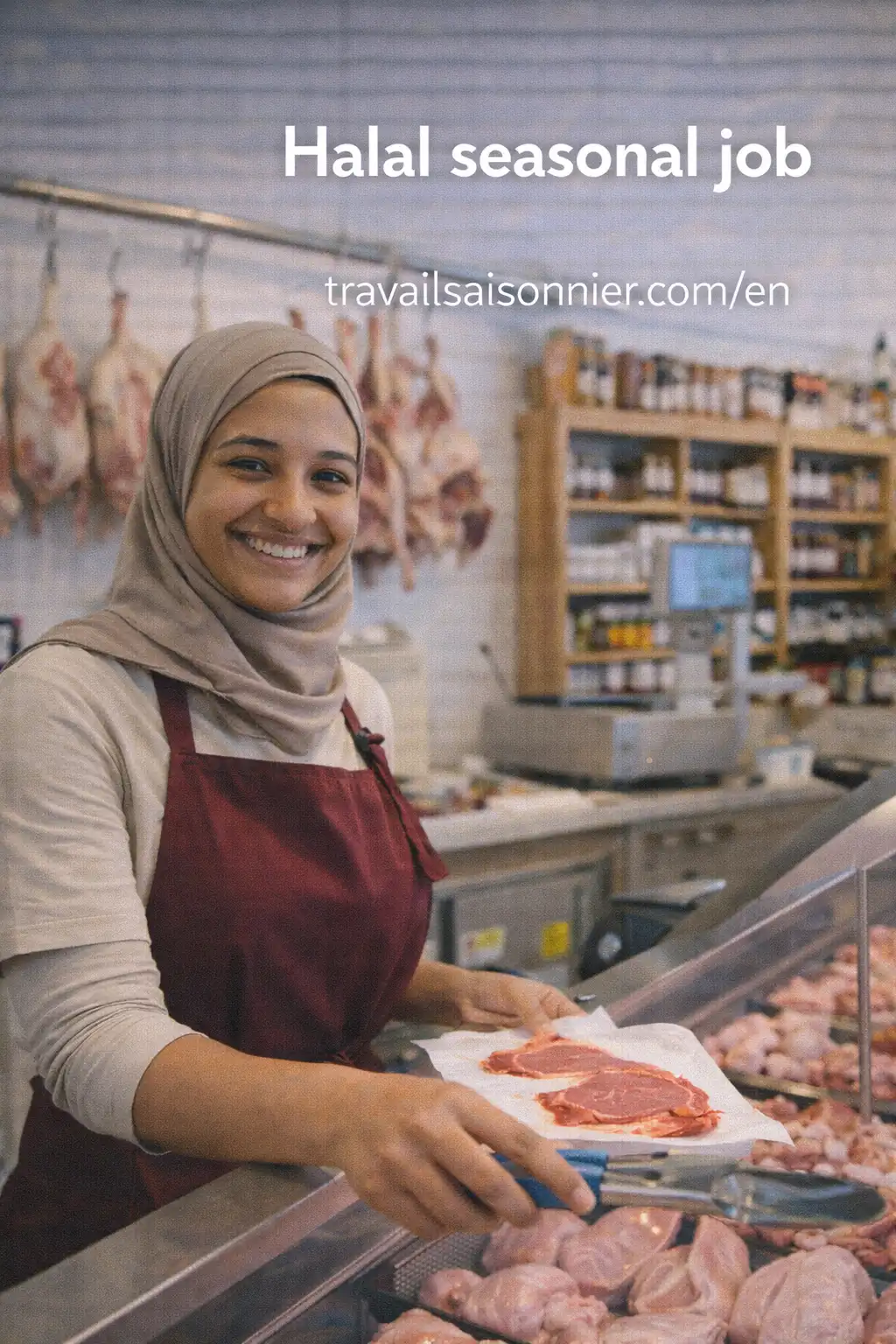
ISLAMIC SEASONAL JOB 2026
A halal seasonal job in 2026 is a short-term job designed to cover a peak period of activity, where “seasonal” and “halal” must be understood together: the contract is temporary, and the workplace conditions or tasks can be compatible with halal requirements, such as avoiding handling alcohol or pork, respecting modesty expectations where relevant, and allowing practical arrangements like prayer breaks when possible.
How a halal seasonal job works in 2026
What a halal seasonal job means in practice in 2026
Islamic seasonal job matters because many seasonal sectors (tourism, hospitality, catering, retail, logistics, food production, agriculture) can include roles that are fully compatible, roles that are compatible with limits (for example, no bar service), and roles that are not compatible depending on duties, uniforms, or products handled, so the job description and the employer’s policies are part of the definition.
How a halal seasonal job is organised during peak periods
The functioning of a halal seasonal job is usually fast-paced: employers recruit quickly for a fixed start date, train workers briefly, and expect immediate productivity during the peak window. For the candidate, the key step is confirming in writing which tasks are required, what the role includes, and whether any religious accommodations are realistic within the operational constraints.
In daily work, halal compatibility often comes from role selection rather than a special contract: kitchen prep that does not involve alcohol, housekeeping, reception, logistics, warehouse picking, halal food packing, family-resort services, or halal grocery retail can match well, while bartending, alcohol-centric venues, or pork-processing tasks typically do not.
Accommodation for seasonal halal workers: when it helps, and what must be checked
In 2026, accommodation can be a major advantage for a halal seasonal job because it makes short contracts financially viable and reduces commuting risks, but it must be verified before accepting: cost (free or deducted), shared rules, distance to the site, safety, and whether daily life arrangements are compatible with your needs (privacy, meals, and practical routines).
Without accommodation, the candidate should calculate the real weekly net benefit after rent, transport, and meals, because a “good” hourly wage can become a weak offer if housing is expensive in tourist areas, and because halal-friendly food access may require additional planning depending on location.
Seasonal hakak jobs overseas: visa and eligibility: the non-negotiable layer for international seasonal work
Visa and work-right criteria shape halal seasonal jobs for international candidates: the allowed duration in weeks, permitted sectors, and sponsor obligations can limit which offers are truly accessible, so a “halal-friendly” offer is only meaningful if the legal work pathway is valid for the country and the candidate’s nationality.
Recruitment criteria are typically practical and performance-based: availability for the full contract, reliability, physical endurance for certain roles, customer service mindset for hospitality, and compliance with safety and hygiene standards; halal compatibility is usually confirmed by clarifying duties, workplace context, and boundaries, not by assuming the label.
Benefits and advantages: why candidates and employers value this format
The benefits of a halal seasonal job include quick income, flexible entry points for candidates without long experience, international exposure when legal, transferable skills (hygiene, teamwork, logistics discipline, customer handling), and sometimes repeat hiring across seasons, because seasonal employers prefer workers who return and already know the routines.
The comparison tool below lists real types of organisations that publish seasonal offers where halal-compatible roles can be found: general job boards, hospitality platforms, regional portals, temp agencies, and direct employers; it helps filter by country, job type, accommodation option, and contract length, then compare visa notes, recruitment criteria, conditions, and links.
• Use role filters to avoid alcohol/pork handling (e.g., housekeeping, reception, logistics, halal food packing).
• Always ask for written confirmation of duties, deductions, and accommodation rules before traveling.
• For international moves, confirm the legal work pathway first (visa/right-to-work), then book travel.
Seasonal jobs with special benefits
Find seasonal work options that include accommodation, food, paid travel or alternative values and conditions.