

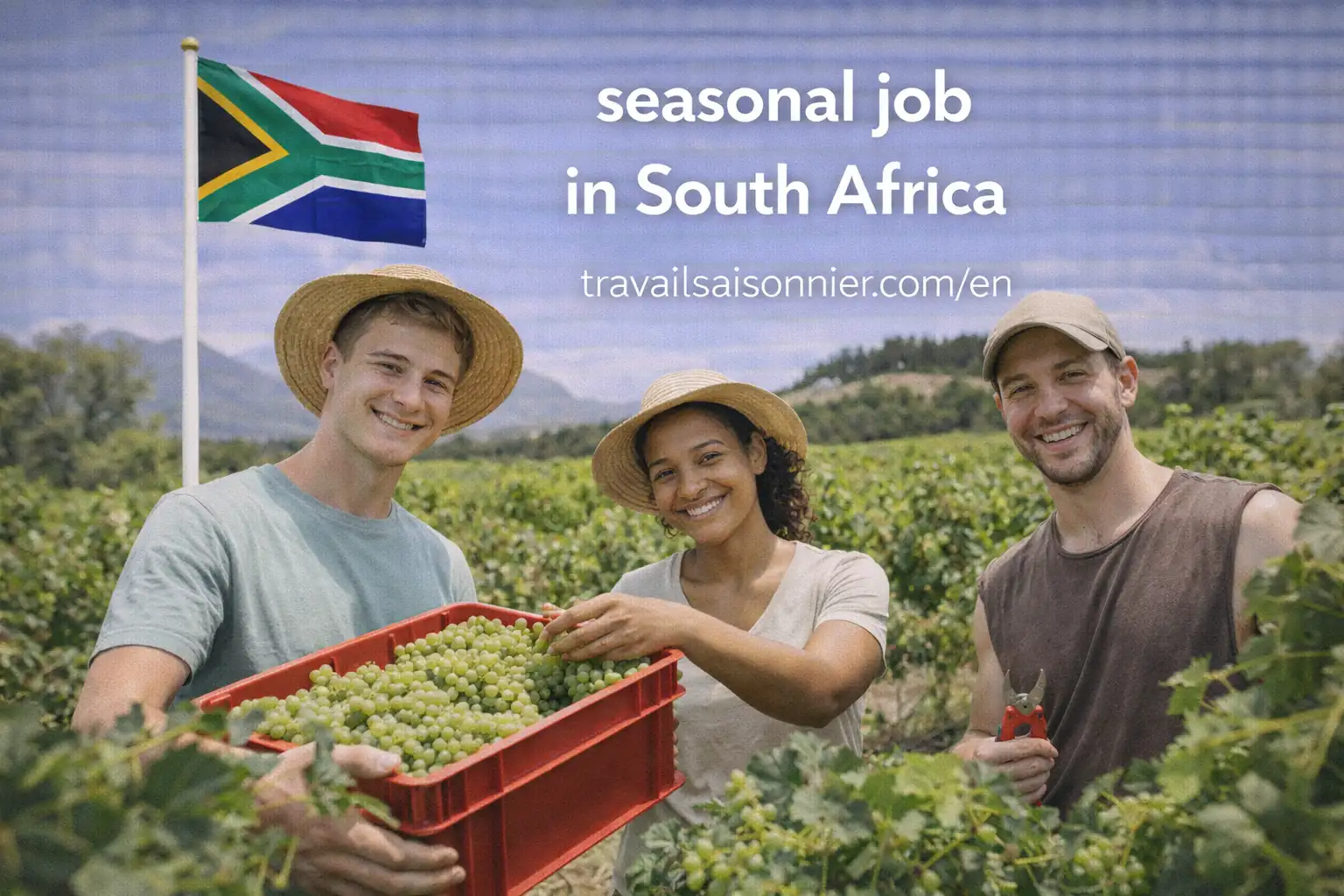
SOUTH-AFRICA SEASONAL WORK
In South Africa, a seasonal job is a time-limited contract designed to cover predictable peaks in demand within local sectors such as agriculture, tourism, hospitality, logistics, events, and some forms of food processing, where the “seasonal” nature of the work and the South African context must be considered together because climate, harvest calendars, regional tourism cycles, and employer practices shape both the timing and the daily realities of the role.
How does a seasonal job in South Africa work
Understanding a seasonal job in South Africa as one combined concept
In practice, a seasonal job in South Africa is not just short-term: it is linked to a specific window (harvest weeks, holiday travel surges, festival periods) and it often comes with operational intensity, fast onboarding, and clear performance expectations, while the candidate must consider transport, safety, location, and the legal right-to-work conditions that apply to their nationality and status.
How seasonal recruitment works in South Africa
The functioning of seasonal recruitment in South Africa is usually rapid: employers publish short-notice openings, select candidates who can start quickly, and provide brief training focused on safety, standards, and productivity. Many roles prioritise availability for the full period, reliability, and the ability to work under time pressure, because replacing staff mid-season can disrupt output during critical peak weeks.
Typical seasonal roles range from farm and packhouse work (picking, sorting, packing, quality checks) to hospitality (housekeeping, reception, kitchen support), events (set-up, ticketing, crowd support), and warehouse tasks (picking, scanning, loading, inventory). The exact duties matter because working conditions can differ widely between regions, climates, and employer standards.
Accommodation in South Africa: when it is offered, and why it matters
Accommodation can be an advantage for a seasonal job in South Africa, especially for farm-based or remote tourism roles, because it reduces commuting costs and makes short contracts financially viable. However, candidates should confirm the real terms: whether housing is free or deducted from pay, the quality and safety of the facilities, distance to the site, and the rules of shared living before accepting an offer.
Without accommodation, the candidate should calculate the weekly net benefit after rent, transport, and meals, and consider practical access to the job site, because even a good hourly rate can become weak if costs are high or commuting is unreliable, particularly when shifts start early or end late during peak periods.
Seasonal work in South Africa: visa, right to work, and compliance for 2026 applications
For international candidates, visa and right-to-work requirements are the non-negotiable layer of seasonal jobs in South Africa: the allowed duration, the permitted employer type, and the documentation standards determine which roles are legally accessible, so candidates should treat any vague “visa included” claims cautiously and rely on official, verifiable employer processes.
Recruitment criteria commonly include fitness and stamina for physical roles, attention to hygiene and food-safety rules for packhouse work, customer service ability for hospitality roles, and sometimes a driving licence or prior experience for logistics tasks. For many seasonal roles, attitude and reliability are valued as much as formal qualifications because training time is limited.
Advantages with a job in RSA: income, skills, and repeat hiring across seasons
The advantages of a seasonal job in South Africa include fast income generation, entry-level access to sectors that train on the job, practical skill building (teamwork, pace, safety, service standards), and the possibility of repeat hiring with the same employer or agency if performance is strong, since many seasonal operations prefer returning workers who already know the routines.
The comparison tool below lists real organisations and platforms that publish seasonal or temporary jobs relevant to South Africa, including job boards, temp agencies, and employer channels, to help you filter by country, job type, accommodation option, and contract length in weeks, then compare visa notes, recruitment criteria, conditions, and links.
• For farm/packhouse roles, confirm shift times, productivity expectations, and transport or housing details.
• For hospitality roles, check whether meals and staff accommodation are included or deducted from pay.
• International candidates: validate right-to-work/visa requirements before paying any third party.
Seasonal jobs by country
Compare seasonal job opportunities across Europe, North America, the Middle East, Africa, Asia and Oceania.
- SEASONAL JOB
- SWITZERLAND SEASONAL JOB
- FRUIT PICKING SEASONAL JOB
- ITALY SEASONAL JOB
- USA H-2B SEASONAL JOB
- AUSTRALIA SEASONAL JOB
- BELGIUM SEASONAL JOB
- CANADA SEASONAL JOB
- CHINA SEASONAL JOB
- DUBAI UAE SEASONAL JOB
- FRANCE SEASONAL JOB
- GERMANY SEASONAL JOB
- INDIA SEASONAL JOB
- IRELAND SEASONAL JOB
- MEXICO SEASONAL JOB
- MOROCCO SEASONAL JOB
- NETHERLANDS SEASONAL JOB
- NEW ZEALAND SEASONAL JOB
- PORTUGAL SEASONAL JOB
- SOUTH AFRICA SEASONAL JOB
- SPAIN SEASONAL JOB
- THAILAND SEASONAL JOB
- TURKEY SEASONAL JOB
- UK SEASONAL JOB
- USA SEASONAL JOB