Andorra: seasonal fruit and vegetable picking jobs are rare, and what farming really offers
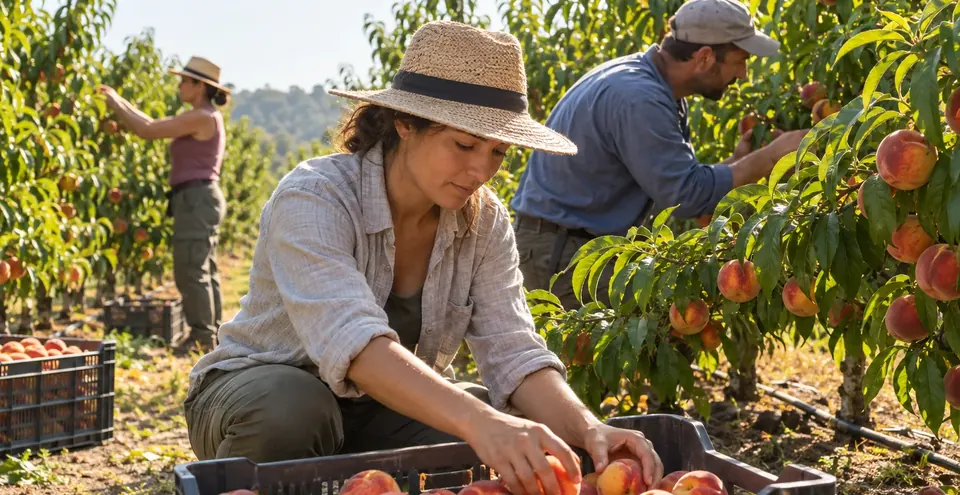
In Andorra, seasonal fruit and vegetable picking jobs hardly exist as an organised sector, because the principality is a mountain country with steep valleys, short growing seasons and very little farmland. Agriculture is limited to small market gardens, a few greenhouses, hay meadows, livestock pastures and some tobacco, which was once the main crop. Occasional help is needed at family farms in the summer, but the posts are informal and mostly filled locally. Foreigners need a work authorisation, so harvest work abroad, in nearby France or Spain, is the realistic option.
This page in other languages : Français
Why Andorra has little harvest work
Geography explains the situation. Andorra lies in the eastern Pyrenees, with its lowest point at about eight hundred metres above sea level and many villages above a thousand. Slopes are steep, soils are thin, and frost can arrive early in autumn and linger in spring, so large fields of fruit or vegetables cannot be grown as they are in the plains of Catalonia or the south of France.
A short note on terminology may help. In Catalan, a seasonal worker is called a treballador de temporada, and a farm is an explotació agrícola, while the word hort describes a vegetable garden. Using these words when you ask around village shops and parish offices makes your request clearer, and people respond warmly when a newcomer makes the effort to speak the local language.
Forests and pastures also provide work of a rural kind. Foresters clear paths, cut firewood and manage woodland on behalf of the parishes, and herders move animals to the high pastures and mend fences. These tasks are physical and need local knowledge, so they are usually done by residents or by experienced seasonal staff recommended by the owners, rather than by newcomers.
History explains the rest. For centuries the valleys lived from pastoral farming, forestry and smuggling, and families kept small plots for potatoes, cabbages, beans and fodder. In the twentieth century tobacco became the main crop, grown in the lower valleys of the Valira rivers, before commerce and tourism replaced agriculture as the engine of the economy.
Today agriculture accounts for a very small share of employment. Land that was once cultivated has been converted to buildings, ski slopes or forest, and farmers receive support from the government to maintain pastures and traditional landscapes. Work in this sector is therefore mostly family-based and managed by owners with long experience.
What farming does exist
Small market gardens near Sant Julià de Lòria, Andorra la Vella and the lower stretches of the Valira produce vegetables, herbs and berries for local sale, and some growers use greenhouses to extend the season. A few producers also make honey, cheese and cured meat, and sell at farm shops and markets. These activities need extra help at specific moments, such as planting in May and harvesting in late summer.
Food traditions still mark the calendar. Autumn brings the slaughter of animals and the making of cured meats, while villages hold fairs that sell cheese, honey, bread and vegetables. Visitors at these fairs, such as the cattle and produce fairs held in some parishes, can speak to producers and learn who might need help. Such contacts are the most reliable way to hear about informal opportunities.
Livestock farming dominates the high ground. Cattle and sheep are driven to summer pastures in the spring, a practice known as transhumance, and return to the valleys in autumn. Hay meadows are mown in July and August, creating short periods of physical work. The Government supports farmers through the Ministry of Agriculture, which monitors animal health and land use.
| Activity | Typical months | Where it takes place |
|---|---|---|
| Planting vegetables | April to June | Sant Julià de Lòria, Andorra la Vella |
| Hay cutting | July and August | Mountain meadows |
| Summer pasture | June to September | High valleys of Ordino, Canillo |
| Vegetable harvest | July to October | Small market gardens |
| Autumn livestock return | September to October | All parishes |
Rules, pay and realistic options
Because the sector is small, there is no organised system of seasonal harvest contracts like those in larger countries. Any paid work for an employer requires registration with the social security fund and, for foreigners, a work authorisation under Andorran immigration rules. A tourist or volunteer helping on a farm in exchange for food may still be treated as working, so rules should be checked first.
For anyone who is determined to pick fruit, the closest large harvests are in Catalonia and southern France. Lleida province is a major producer of peaches, nectarines, apples and pears, with work from May to October, and the Roussillon plain near Perpignan supplies apricots, peaches and vegetables. Workers should apply through the employment services of those countries and make sure they have the right to work there.
Pay for casual farm work follows the general labour law, with a written contract where hours and tasks are clear. Heavy outdoor work in the mountains means long days in the sun and rain, and the weather can change suddenly even in summer. Farmers expect workers to be strong, reliable and used to rural life, and they usually prefer someone they know.
For people who truly want harvest work, the best options are close to Andorra. In France, the Cerdagne and Roussillon regions offer fruit picking from spring to autumn, and in Catalonia, the plains of Lleida and the Empordà need pickers for peaches, apples and pears. Those jobs follow French and Spanish law, so workers should look at the rules of those countries.
Where to look and what to avoid
Ask directly at village farms, agricultural cooperatives and the agricultural services of the Government. The parish councils, known as comuns, can sometimes name families who need help, and local noticeboards show requests in Catalan. Responding in the local language, even briefly, makes a good impression.
Another approach is to combine farm help with a main job in tourism. Some residents keep a small garden or a few animals and hire help for a weekend or two, and this can complement a winter contract. Such arrangements should still be written down so that pay, tasks and insurance for accidents are clear, since mountain farm work carries real risks from machinery and slopes.
- Do not assume that unpaid help in exchange for housing is legal without checking.
- Avoid offers that promise large pay for easy farm work in the principality.
- Ask for a written agreement and the name of the person responsible.
- Check the weather and clothing needs before a day on high pastures.
Anyone who wants to remain in Andorra year round should consider other jobs in hotels, shops or mountain tourism, which are much more numerous than farming posts. A resident with a steady job in tourism can often find a small plot or an allotment to rent, which allows modest gardening without the need to be employed in agriculture.
Common questions on farm work
Is there a fruit picking season in Andorra?
There is no organised fruit picking season. Some households harvest apples, plums and berries from small orchards, and a few producers sell at markets in summer and autumn, but the quantities are small and the work is done by families. Real fruit picking jobs are found in neighbouring regions of Spain and France.
Can a visitor volunteer on a farm?
Volunteering is still subject to the rules on work, so a visitor should ask the immigration department before agreeing to labour in exchange for lodging. Informal arrangements may be misunderstood by authorities and can lead to problems. A clear written statement about the nature of the help protects both the farmer and the visitor.
What is the best alternative to farm work?
Tourism offers by far the most seasonal jobs in Andorra, in winter and summer, with hotels, shops, lifts and activities. Workers who like the outdoors can find posts in bike parks, hiking centres or snow grooming. For farm work, regions in nearby Catalonia and France provide larger and more structured harvests.
Where to find these jobs
- Ministry of Agriculture of Andorra — Government department that supports farmers, monitors livestock and manages pastures and rural development in the principality.
- Servei d'Ocupació d'Andorra — Government employment service that lists vacancies and registers job seekers, including occasional rural and outdoor work.
- Cambra de Comerç, Indústria i Serveis d'Andorra — Chamber of commerce that represents Andorran firms, including food producers, and organises trade fairs and training for employers.
- Caixa Andorrana de Seguretat Social — Public social security fund that registers employees, including agricultural workers, and administers health and pension contributions.
Official and legal references
- Govern d'Andorra — Official government portal with English information on agriculture, residence, work authorisation and public services in Andorra.
- Visit Andorra — Official tourism website in English describing the valleys, parishes, mountain landscapes and rural traditions of the principality.