Colombia: seasonal jobs, temporary work opportunities and how hiring works
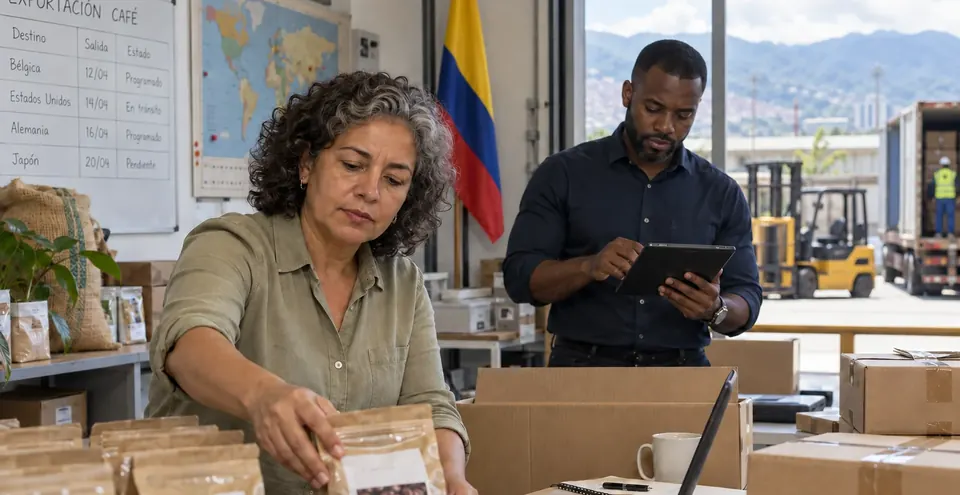
In Colombia, seasonal jobs and temporary work opportunities are short-term positions tied to harvests, holiday peaks and festivals rather than to a classic summer and winter. Coffee picking in the Andean departments, flower cutting on the Bogota savanna and hotel work in Cartagena, Santa Marta or the coffee region each follow a different calendar. Employment falls under the Substantive Labour Code, which recognises fixed-term contracts, contracts for a specific task and daily-wage arrangements. Foreign nationals need a visa or permit that allows paid work, so legal status must be settled before any search begins.
This page in other languages : Español
How the Colombian working calendar is built
Colombia lies on the equator, so temperatures barely change from month to month and the year is divided by rainfall and altitude instead. Most of the Andean zone has two wetter and two drier periods, which is why two coffee harvests occur in many departments: a main crop and a smaller one known as the mitaca. Their timing differs between the central and southern coffee areas, so a picker who plans a trip should ask the local growers' committee which weeks are busy.
Tourism adds a second rhythm. The busiest weeks are the Christmas and New Year period, Holy Week, the mid-year school holidays and the many long weekends created by Monday public holidays, when families from Bogota, Medellin and Cali head for warm lowlands. Hotels, restaurants, transport firms and tour operators hire extra staff for exactly these windows and often release them a few days after the crowds leave.
Festivals concentrate work in particular cities. The Barranquilla Carnival precedes Lent, the Flower Fair in Medellin takes place in August, the Cali Fair fills the last days of December and the Manizales Fair opens the new year. Flower growers on the savanna around Bogota and in eastern Antioquia also race to fill orders before Valentine's Day and Mother's Day, which creates short, intense hiring peaks.
Sectors and regions that hire temporary staff
Agriculture is the most visible employer. Coffee dominates the Andean slopes of Caldas, Risaralda, Quindio, Antioquia, Huila, Cauca and Narino, bananas are grown around Uraba and Magdalena, and flowers fill greenhouses near Bogota and Rionegro. Smaller crops such as avocado, passion fruit, blackberries and potatoes bring picking and packing work to Tolima, Boyaca, Cundinamarca and Santander.
Services follow the visitors. Cartagena's walled city, the beaches of Santa Marta and the Tayrona coast, the islands of San Andres and Providencia, the Coffee Cultural Landscape, Medellin and Bogota all recruit waiters, cooks, receptionists, drivers and guides in busy weeks. Construction, retail and call-centre campaigns before Christmas add further temporary vacancies in the big cities.
| Period | Typical temporary work | Main areas |
|---|---|---|
| Main coffee harvest | Picking, sorting, drying | Coffee Axis, Antioquia, Huila |
| Mitaca coffee crop | Smaller picking teams | Central and northern Andes |
| Weeks before Valentine's Day | Cutting and packing flowers | Bogota savanna, Rionegro |
| Holy Week and mid-year holidays | Hotel, restaurant and guide work | Cartagena, Santa Marta, coffee region |
| Late December | Fair staff, hospitality, retail | Cali, Medellin, Bogota |
Not every region offers the same kind of job. The Pacific coast of Choco and Valle del Cauca depends on small lodges and whale-watching guides, the eastern plains on cattle ranches and rice, and the Amazon on community-based tourism. Remote areas often hire through relatives and neighbours, so formal advertisements are rare there.
Regional customs also matter. In the coffee region, farm families often hire neighbours for the harvest and pay at the end of each week, while on the Caribbean coast hotel recruiters favour candidates who can start at short notice. In Bogota and Medellin, temporary agencies place staff in warehouses and offices during the pre-Christmas rush. Knowing how each region recruits saves time and prevents wasted journeys.
Who may work, from what age and under which contract
Colombian citizens may take seasonal work anywhere in the country, but adults are preferred and the standard minimum working age is eighteen. Adolescents between fifteen and seventeen may be employed only with authorisation from the labour inspectorate and within reduced hours, and they may not do hazardous tasks such as handling pesticides or working at night. Employers who hire minors without authorisation risk sanctions.
Foreign visitors cannot simply work on a tourist entry stamp. A work-capable visa or permit issued through the Ministry of Foreign Affairs and registered with Migracion Colombia is required, and Venezuelan nationals may hold a temporary protection permit that grants the right to work. Anyone who is unsure of their category should ask the immigration authority before accepting an offer.
- Fixed-term contract: a written agreement with a start and end date, common in hotels and flower farms
- Contract for a specific task: used for a harvest or an event, ending when the task is finished
- Daily-wage work: paid per day or per kilo of coffee, with social security still owed by the employer
- Apprenticeship contract: a training arrangement linked to the national training service SENA
Whatever the contract, the employer must enrol the worker in health insurance, the pension system and occupational risk cover, and must pay the legal minimum wage or the agreed task rate when it is higher. Proportional service bonus and severance savings accrue even on short contracts. The exact amounts change by regulation, so check them with the Ministry of Labour.
Finding offers and avoiding traps
The public employment service, run with the national training service SENA, publishes vacancies and registers jobseekers free of charge. Regional hotel associations, flower growers' bodies and coffee committees also circulate openings, and local radio and notice boards still matter in rural towns. Applying in person at farms and hotels a few weeks before the peak is common and often effective.
Be cautious with any offer that asks for money up front, promises a visa or guarantees a high income. Legitimate employers never charge placement fees to workers. Ask for the contract in writing, confirm the employer's legal name, check where you will sleep, and keep copies of your identity document and permits. Travel to remote farms only after agreeing the return route and payment day.
Preparation makes the difference between a good trip and a stranded one. Compare several offers, ask for the exact start date and the place where you will sleep, and keep a reserve for the return journey. Learn basic Spanish phrases for work, because instructions on farms and in kitchens are rarely given in English. Travel insurance that covers work accidents is worth considering, even when the employer provides social security.
Frequently asked questions about seasonal work in Colombia
Can a tourist work in Colombia during a short trip?
No, a tourist stamp does not authorise paid work. Colombia expects foreign workers to hold a visa or permit that includes work rights before they start, and the employer must register them. Volunteers in hostels or farms who receive only room and board still operate in a grey area, so ask the immigration authority about your case instead of relying on informal arrangements with a host.
Do seasonal workers receive social security benefits?
Yes. Employers must register every worker, including temporary ones, with a health provider, a pension fund and an occupational risk insurer, and should affiliate them to a family compensation fund. Seasonal workers also earn a proportional service bonus and severance savings. If a farm or hotel avoids these obligations, the labour inspectorate of the municipality can receive a complaint.
When is the best time to look for work?
It depends on the sector. For coffee, ask growers about the weeks before the main harvest and the smaller mitaca. For hotels, begin four to six weeks before Holy Week, the mid-year holidays or Christmas. For flowers, contact farms in the months leading up to Valentine's Day and Mother's Day, when orders rise sharply.
Where to find these jobs
- Servicio Publico de Empleo — State employment service that lists vacancies and registers jobseekers in every department free of charge
- SENA — National training service that offers vocational courses and certifies skills useful for tourism and agricultural work
- Federacion Nacional de Cafeteros — Coffee growers' federation whose departmental committees organise the harvest and support rural workers
- Asocolflores — Flower exporters' association representing farms near Bogota and Rionegro that recruit seasonal crews
Official and legal references
- Colombia Travel — Official tourism portal of the national promotion agency with regional guides, seasons and visitor information in English
- Ministry of Foreign Affairs of Colombia — Government site that explains visa categories and consular procedures for foreign nationals, with an English version