Bosnia and Herzegovina: seasonal fruit and vegetable picking jobs in plums, berries and grapes
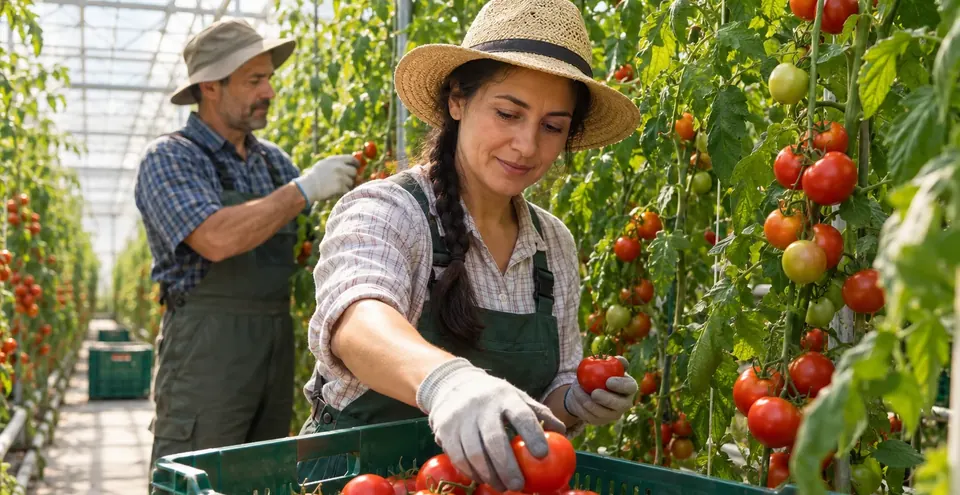
In Bosnia and Herzegovina, fruit and vegetable picking jobs are seasonal tasks on family farms and small commercial orchards, concentrated in plum areas of the north, raspberry and blueberry villages in the east and the vineyards and tangerine groves of Herzegovina. Work is physical and often informal, with pay by day or by quantity, and most pickers come from nearby villages. Labour law requires written contracts and insurance, though small farms rarely follow it fully. Foreigners need residence and work permits, so organised foreign harvest recruitment is limited and applicants should be careful.
Crops, regions and months
Plums are the best-known fruit. The Posavina plain along the Sava and the Podrinje region produce plums for fresh sale, drying and the national brandy, rakija, and pickers gather them from late July to October. Apples, pears and cherries are grown in the north and centre, and Kupres and the central highlands are known for potatoes and cabbage lifted in autumn.
The patterns of land ownership are a key feature of farming in Bosnia and Herzegovina. Farms are small and fragmented, often only a few hectares divided into several plots, and many families farm for their own consumption and sell the surplus. Because of this structure, labour demand is spread across thousands of tiny holdings instead of a few large estates, and workers rely on personal links rather than recruitment agencies.
The east is known for berries. Villages around Srebrenica, Bratunac and Milići grow raspberries and blueberries, picked from late June to August, and cooperatives collect and freeze them for export. In forests across the country, people also gather wild blueberries, mushrooms, rosehips and herbs, which are sold to buyers who deliver to processors and exporters.
Herzegovina has a warmer climate. Around Čapljina and the Neretva valley, tangerines and vegetables are harvested from October to December, vineyards in Čitluk, Mostar, Ljubuški and Trebinje are picked in September, and figs and pomegranates ripen in late summer. Tobacco, once a main crop in the area, still needs seasonal hands for leaf picking in July and August.
The work and its demands
Work typically starts at dawn. Plum pickers climb ladders and shake or hand-pick fruit into crates, raspberry pickers bend over bushes and fill small baskets, and grape pickers cut bunches along terraces. Workers should expect to be on their feet for most of the day, to carry loads and to deal with heat, wasps and thorns.
Cooperatives play a growing role. Raspberry and blueberry cooperatives in the east, plum associations in the north and wine cooperatives in Herzegovina collect fruit, offer cold storage and negotiate with exporters, and they employ people for sorting, packing and transport. A worker who joins a cooperative's team gains more stable pay and some training in hygiene and quality standards than one who works alone.
Families often work together, and neighbours exchange help during peak weeks. Larger farms and cooperatives employ pickers, drivers and packers, and some operate cold stores in which frozen berries are packed. Processing plants for plums, jam and juice add posts in sorting and filling. A good picker is quick but careful, keeping fruit clean and undamaged.
| Crop | Harvest months | Main areas |
|---|---|---|
| Raspberries and blueberries | June to August | Srebrenica, Bratunac, Milići |
| Plums | July to October | Posavina, Podrinje |
| Grapes | September | Čitluk, Mostar, Ljubuški, Trebinje |
| Tobacco leaf | July to August | Herzegovina |
| Tangerines | October to December | Čapljina, Neretva valley |
Pay, housing and safety
Pay is often by day or by weight. Berry pickers may be paid per kilogram, while orchard and vineyard workers receive a daily rate. Payment in cash is typical, but a written note of the rate and the date of payment avoids disputes. Wages are in convertible marks, and the amount depends on the crop and the farm, so no figure can be promised.
Weather decides everything. Late frost in spring can destroy blossom, hail can ruin a vineyard within minutes, and heavy rain at harvest time spoils berries. When this happens, harvest jobs shrink or disappear, and pickers lose income, so it is wise to have another source of work. The hydrometeorological institutes publish forecasts, and farmers watch them closely, announcing picking days with little notice.
Many pickers live at home or in nearby villages, but some farms and cooperatives provide simple accommodation during peak weeks. Check for clean water, toilets and cooking facilities. Employers should provide gloves and water, and workers should avoid fields that were recently sprayed, taking care also in hilly areas where ladders and slopes cause accidents.
A particular warning applies to land that may still hold mines left after the conflict of the nineteen-nineties. Anyone who picks in forests or abandoned orchards should work only in areas confirmed as safe by local people and the Mine Action Centre, and never enter marked or unfamiliar zones. This risk is real and demands attention.
Finding harvest work
Most recruitment is by word of mouth. Farmers speak to neighbours, cooperatives post notices in village shops, and buyers of berries and plums organise collection points. Municipal offices and employment institutes in Srebrenica, Brčko, Mostar and Čapljina can point to cooperatives and larger farms that hire in season.
Transport can make or break a harvest job. Fields lie far from towns, buses are infrequent, and early starts mean that workers must arrive before dawn. Ask the farmer or cooperative whether a vehicle collects pickers, share lifts with neighbours and plan how to return when work ends early because of rain or heat.
Health and hygiene are part of every harvest. Wash hands before eating, drink clean water, protect skin from sun and insects and see a doctor if you are bitten by a tick, which are common in forests and meadows. Pickers should also cover cuts, avoid sprayed plants and keep their tetanus vaccination up to date. These simple steps prevent illnesses that could cost a week of work.
- Visit the village a few weeks before the harvest and speak to farmers.
- Agree on the rate, the hours and the day of payment.
- Wear sturdy shoes, a hat and clothing that protects from sun and thorns.
- Ask whether transport to the field is provided.
Foreign workers are rarely hired for picking because local labour is available, and legal procedures for permits are demanding. People offered picking jobs abroad should verify the agency with the Service for Foreigners' Affairs and avoid paying fees. Never hand over your passport as a guarantee and never pay a deposit to a person who claims to place workers on farms in the country.
Common questions
Is there fruit picking all summer in Bosnia and Herzegovina?
There is a continuing succession of harvests. Berries start in June, plums follow from July, grapes in September and tangerines at the end of the year, but each lasts a few weeks. A worker who moves between regions can find work for many months, though contracts are short and gaps occur.
Do I need experience?
Not for most picking tasks. Farmers show newcomers how to handle fruit, and quality matters more than speed on the first days. Experience matters for pruning, grafting and machinery work, which are better paid. A willingness to work in heat and a respectful attitude to the family who employs you are the main requirements.
Is picking work legal without a contract?
Labour law requires a written contract and registration, but small farms often use informal agreements. A worker without a contract has limited protection, so keep a written note of the arrangement, ask for a signed receipt when paid, and contact the labour inspectorate if wages are not paid or conditions are unsafe.
Where to find these jobs
- Federal Ministry of Agriculture, Water Management and Forestry — Federation ministry that supports farmers, orchards and cooperatives and publishes rules and programmes for agricultural production.
- Ministry of Agriculture, Forestry and Water Management of Republika Srpska — Entity ministry that supports farmers, berry producers and cooperatives and administers subsidies for agricultural production.
- Employment Agency of Bosnia and Herzegovina — State agency that coordinates employment policy and publishes labour market information relevant to agricultural work.
- Bosnia and Herzegovina Mine Action Centre — Official centre that manages demining and publishes maps and warnings that protect workers in fields and forests.
Official and legal references
- Service for Foreigners' Affairs — Official state service publishing English information on residence and work permits for foreign workers in the country.
- Tourism portal of Bosnia and Herzegovina — Official English-language tourism portal helpful for locating regions such as Herzegovina and the eastern berry areas.