Grenada: seasonal fruit and vegetable picking jobs on spice, cocoa and market farms
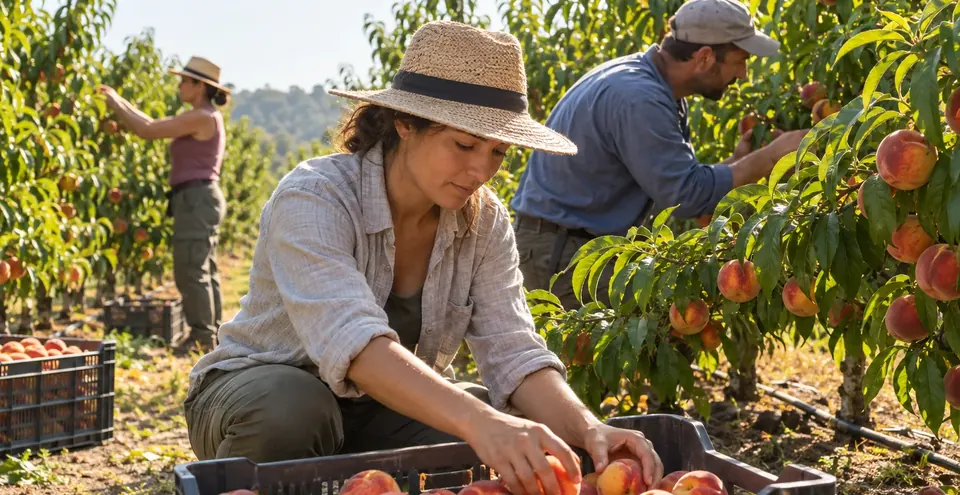
In Grenada, seasonal fruit and vegetable picking jobs are small-farm harvest tasks on a volcanic island where nutmeg, mace, cocoa, bananas, citrus, mangoes, breadfruit and vegetables are grown on steep family holdings. There is no large organised harvest workforce, so most work is casual, arranged with farmers or co-operatives and paid by the day, the sack or the pound. Gouyave, St. Andrew and St. Patrick are the main farming areas. Citizens fill the jobs, and a foreigner needs a permit to work legally on any holding.
Crops and harvest rhythm
Nutmeg is the symbol of the island, and its harvest runs over many months, with a main flush in the middle of the year and further falls through the autumn. Pickers gather ripe fruit that has split open and dropped under the trees, then separate the nut from the red mace, which is dried and sold separately. After Hurricane Ivan, many trees were lost, and replanted orchards are still maturing.
Cocoa has a strong place in Grenadian agriculture, with estates such as Belmont, plantations around Hampstead and small farms in St. Patrick and St. Andrew supplying organic and fine-flavour beans. Pods are cut with a machete or pole, split open, and the beans are fermented and dried in boxes and on trays. Chocolate makers buy beans directly from farmers.
Bananas, plantains, mangoes, soursop, golden apples, breadfruit, pawpaw and citrus grow around homes and in gardens. Vegetables such as tomatoes, sweet peppers, lettuce, cucumbers, pumpkin, callaloo and seasoning peppers are grown in the dry months and sold at the St. George's market and by roadside vendors. Some farms use greenhouses and drip irrigation to supply hotels.
Fishing and spice drying are close companions of picking. Women and men on the east and north coasts lay nutmeg and cocoa on drying trays in the sun, turning them by hand, while fishers sell their catch at roadside stalls. These parallel trades provide alternative income when harvests are poor or rain delays drying.
Planting calendars matter to anyone seeking work. Seedlings of vegetables go into beds as the rains ease at the beginning of the year, while new cocoa and nutmeg trees are usually planted when soil is moist. Growers recruit helpers at these moments, so asking neighbours which farms are preparing land can lead to short contracts.
Tasks and working conditions
Picking in Grenada is physical work on slopes. Pickers carry baskets and sacks along muddy paths, climb banks and reach into trees. Nutmeg gathering requires stooping repeatedly, cocoa picking involves swinging a cutlass, and banana cutters carry heavy bunches on their shoulders to a collection point.
Heat and rain shape the day. Work starts early, because the afternoon sun is intense and showers can arrive suddenly in the wet season from June to December. Boots, a hat, a light waterproof and insect repellent are practical, and workers should carry drinking water, as well as a small kit for cuts.
After harvest, work continues with sorting, drying, boxing and carrying produce. At the Gouyave nutmeg processing station, workers sort and grade nutmeg and mace for export under the supervision of the co-operative association. In small farm kitchens, spices are dried and packed for tourists and local shops.
Greenhouse and shade-house growing has expanded on the south of the island, where growers supply hotels with lettuce, peppers and herbs year-round. These farms hire workers for planting, picking, washing and packing, and the work is more regular than open-field harvest. Workers learn hygiene rules, record keeping and the standards demanded by hotel chefs.
Weather alters every plan. A week of heavy showers can delay nutmeg drying, spoil tomatoes and halt transport, and a dry spell can slow fruit growth. Experienced pickers watch the sky, start early and prepare a second option for the day, such as pruning or weeding when picking is impossible.
| Crop | Main area | Harvest pattern |
|---|---|---|
| Nutmeg and mace | Gouyave, St. John, St. Andrew | Months of picking, peak mid-year |
| Cocoa | St. Patrick, St. Andrew, Hampstead | Main and smaller crops over the year |
| Banana and plantain | St. David, St. Patrick | Cut throughout the year |
| Vegetables | Grand Etang area, south coast farms | Mostly dry months, by irrigation |
Pay, housing and finding work
Payment methods vary. Some farmers pay a daily wage, others pay by weight, such as per pound of nutmeg, and family labour is common. Ask clearly about the rate, the day of payment and who supplies tools. The minimum wage rules apply to employees, so a written agreement helps you prove what was promised.
Housing is not usually provided, since most workers live in villages near the farms. Visitors who want to help on a farm sometimes stay with the owner's family. Respect for the household, the land and the neighbours is important, and polite greetings along the way show good manners.
To find work, speak with farmers, the Grenada Co-operative Nutmeg Association, the Grenada Cocoa Association and extension officers from the Ministry of Agriculture. Weekend markets and community groups also share information. Seasonal demand is greatest after storms, when clearing and replanting require extra hands.
Youth programmes and community groups help young people enter agriculture. Training schemes teach grafting, composting, pest control and post-harvest handling, and they link participants with farms that need extra help. Women's groups process spices, sauces and cocoa products, offering part-time tasks that fit around family commitments.
Legal, safety and environmental points
Farm employees are protected by general employment law, but small farms often use verbal arrangements. A foreign national needs a permit before accepting paid work, and volunteer stays should be cleared with the authorities. Ask the Ministry of Agriculture about any schemes that welcome visitors.
Health and safety matter on slopes. Take care on wet paths, wear boots, avoid working alone and keep tetanus protection current. Some farms use fertiliser and sprays, so ask what has been applied and wash your hands before eating. In the rainy months, mosquitoes increase, and dengue is a risk, so use repellent and clothing.
Environmental awareness is part of farming here. Grand Etang National Park and the forest reserves protect watersheds and wildlife, and farmers avoid clearing steep land that could slide in heavy rain. Agroforestry, where cocoa and nutmeg trees grow beneath tall shade trees, helps keep soil stable.
After heavy storms, farm recovery is a major source of temporary work. Fallen trees must be cut and removed, banana fields replanted and terraces repaired. Government and non-governmental organisations sometimes support clean-up crews, and farmers need strong, careful workers. Ask who provides tools, gloves and boots before agreeing.
Respect for farm owners and their land is essential. Do not pick fruit from trees without permission, close gates behind you, and keep paths clean. In rural villages, neighbours know each other well, so a polite and reliable worker quickly earns a good name, which leads to more offers during the next harvest.
Frequently asked questions
Is nutmeg picking a job for visitors?
Mostly no. It is a family and co-operative activity carried out by local people. Visitors may tour farms and processing stations, but paid work requires a permit. Anyone who wants to volunteer should check the rules and agree conditions with the owner.
Which month is best for farm work?
The answer depends on the crop. Nutmeg is picked over many months, vegetables are best in the drier season from January to May, and cocoa has a main crop and smaller flushes. After a storm, clearing and replanting work increases.
How hard is the work?
It is physically demanding because of heat, slopes and rain. Workers need good fitness, patience and sensible clothing. Short shifts and frequent water breaks are advisable, and newcomers should build up their pace gradually.
Where to find these jobs
- Grenada Co-operative Nutmeg Association — Co-operative that buys, grades and exports nutmeg and mace, with processing stations that employ seasonal workers.
- Grenada Cocoa Association — Association of cocoa growers that supports quality, fermentation and marketing of beans for chocolate makers.
- Grenada Ministry of Agriculture — Government ministry that provides extension services, crop advice and programmes for farmers across the islands.
- Marketing and National Importing Board — State agency that buys produce from farmers and supports marketing of fruit and vegetables.
Official and legal references
- Government of Grenada — Official government portal with ministry information, public notices and agricultural services for residents.
- Pure Grenada — Official tourism site describing spice estates, chocolate factories, rainforest trails and the farming landscape.