Ukraine: seasonal fruit and vegetable picking jobs on farms in Vinnytsia, Zakarpattia, Lviv and the Kyiv region
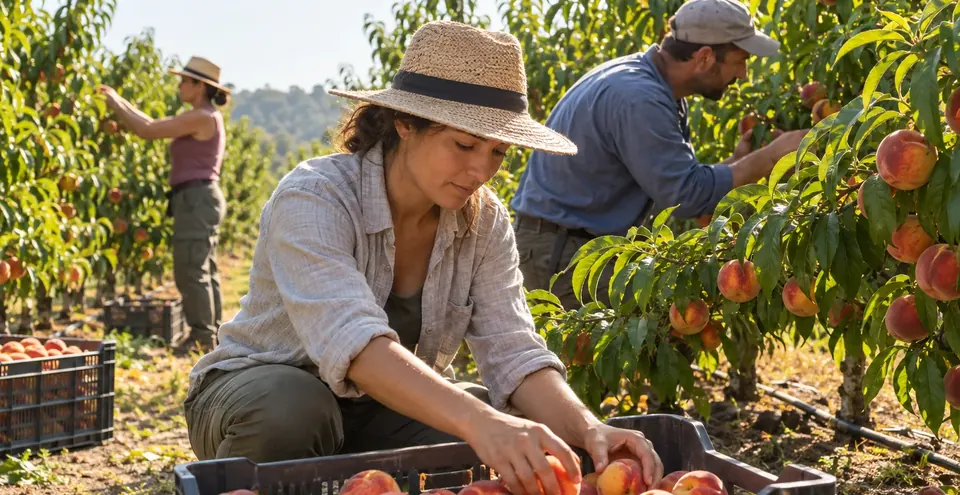
In Ukraine, seasonal fruit and vegetable picking jobs are the manual side of a huge farming sector: strawberries and cherries in early summer, vegetables and melons in the heat, and apples, plums and grapes in autumn. Most work is on farms in Vinnytsia, Cherkasy, Lviv, Zakarpattia and around Kyiv. Grain and sunflower fields are mechanised and offer few hand jobs in Ukraine. War has made some regions dangerous, with mines and shelling, so only safe, verified areas should even be considered by any worker.
Safety first on the land
Farmland is not neutral ground. In areas that saw fighting, fields may contain landmines and unexploded shells, and the authorities strongly warn against entering unchecked land. Demining is a major national programme, but it is slow. Work only in regions far from the front, on farms with a clear history, and obey signs and instructions from local authorities and farm managers at all times.
The safest agricultural zones for seasonal work are in the west and centre: Zakarpattia, Lviv, Volyn, Ivano-Frankivsk, Chernivtsi, Ternopil, Khmelnytskyi, Vinnytsia and parts of Cherkasy and Poltava. Even there, air alerts occur, and farms should have a plan for shelter in sheds or cellars. The south and east, including regions that once produced watermelons and tomatoes, are heavily affected and are not suitable for newcomers.
The labour supply has been strained. Mobilisation, displacement and migration have removed many workers, and farms use machines where they can. Fruit and berries still need hands, and employers often recruit among villagers, women, older residents and displaced families. Because of competition for the best places, a foreigner without a permit has few chances of legal work and should verify every claim. Seasonal workers who return to the same farm year after year usually receive the best conditions, while newcomers start with the hardest rows and the longest shifts.
Crops by month in safer regions
Spring starts with greenhouse vegetables and the first strawberries near Lviv, Kyiv and Zakarpattia. Commercial berry farms plant in April and May, and picking begins in late May and June. Cherries ripen in Vinnytsia, Kyiv region and Zakarpattia from June, and are followed by apricots and early plums. In the forests of Polissya and Volyn, blueberries and wild berries are gathered in July and August.
Summer vegetable harvests include tomatoes, cucumbers, peppers, zucchini, cabbage, onions and potatoes across the central regions. In Zakarpattia, the lowlands near Berehove and Mukachevo grow peppers, tomatoes and grapes, and the area is famed for wine. Many households preserve vegetables in jars for winter, and local markets in Lviv, Uzhhorod and Vinnytsia pay for fresh produce in the early morning.
Autumn is the main fruit season. Apples are picked from late August to October, with large orchards in Vinnytsia, Khmelnytskyi, Zakarpattia and the Kyiv region. Plums, pears, walnuts and grapes follow, and in October potatoes and beets are lifted. The farm year ends with storage and sorting, which may offer a few weeks of indoor work in packing houses and cold stores.
Weather and soil shape every harvest in Ukraine. Spring frosts can damage cherry and apple blossom, hail sometimes hits orchards in summer, and heavy rain makes dirt tracks impassable for trucks. Farmers in Zakarpattia, with its mild lowland climate, start earlier than those in Volyn or Lviv, so a picker who is flexible can follow the ripening from the south-west to the northern forests and stretch the season over several months.
| Month | Typical picking work | Safer areas |
|---|---|---|
| May to June | Strawberries, cherries, greenhouse vegetables | Lviv, Zakarpattia, Kyiv region |
| July to August | Vegetables, blueberries, plums, early apples | Volyn, Vinnytsia, Zakarpattia |
| September to October | Apples, grapes, walnuts, potatoes | Vinnytsia, Berehove, Khmelnytskyi |
| November | Sorting, storage, late cabbage and beets | Packing houses, central oblasts |
The work, pay and housing
Picking is hard physical labour. Berry pickers bend or kneel for hours, apple pickers climb ladders and carry baskets, and vegetable workers lift crates. Days begin early to avoid the heat, and breaks are short. Supervisors check ripeness and quality, and orders for supermarkets demand careful handling. Gloves, hats, sunscreen and sturdy shoes help, and workers should drink water regularly and rest in the shade.
Pay is calculated by the hour, by the day or by weight. Berry harvests are frequently paid per kilogram, and apple picking per crate or per bin. Rates differ between farms and are agreed orally or in writing. Settle the rate and the day of payment ahead of the first shift, weigh produce in front of the supervisor and keep notes. Legitimate farms pay through a bank account or with a receipt.
Housing is arranged by some larger farms, with rooms in village houses or dormitories, and others hire only local workers. Check the conditions, heating, sanitary facilities and shelter in case of alerts. Transport to the field may be provided in vans. Take care of documents, and never hand over your passport or identification to an employer, even if they say it is for registration.
Legal framework
Under the Labour Code, farms should conclude written contracts, including fixed-term ones for seasonal work, and register employees. Many small farms use informal arrangements, but these lack protection if an injury or a pay dispute occurs. A worker can ask for a written agreement stating the dates, the pay, the tasks and the working hours, and can seek advice from the State Employment Service or the labour authorities.
A foreign national must obtain permission to work from the State Employment Service, unless a special status exempts the person. Entry rules during martial law are strict, and tourist visits do not authorise work. Anyone who plans seasonal agriculture work should speak to the Ukrainian embassy and read the foreign ministry guidance. Agents who promise easy placements, safe transport and high pay without paperwork should be treated with suspicion.
Young people may work from the age of sixteen, or fifteen with consent for light tasks, and they must not do heavy or dangerous work. Hours for minors are shorter, and employers must organise medical checks. Farms must provide drinking water and protective equipment when chemicals are used, and workers may refuse tasks that clearly endanger their life. Complaints can be sent to the State Labour Service.
Questions about harvest work in Ukraine
Where is it safest to do harvest work?
The far west and the central regions are considered safer than the east and south, but no area is free of air alerts. Choose a farm with a known address, shelter arrangements and a written agreement. Avoid fields that have not been cleared of mines, never leave marked paths and follow local instructions. Always monitor official alert channels and keep your embassy informed of your location.
Do I need to speak Ukrainian?
Basic Ukrainian or Russian is very useful, because supervisors give instructions orally and few farm managers speak English. Learning the words for crate, weight, water, break and danger helps you work safely. In larger berry farms, mixed teams exist and a translator or coordinator may assist. A little language effort builds trust and makes it easier to resolve payment questions.
How can I check that a farm is real?
Ask for the legal name and registration number, search for the company in public registers, speak with former workers and ask for references from the local village council. Visit the farm before committing if possible. Pay nothing in advance for a job or transport, and keep copies of messages and the signed agreement, since these help if there is later a dispute about wages. A local council or a trusted neighbour can often confirm that the farmer is honest and that previous pickers were paid on time.
Where to find these jobs
- Ministry of Economy of Ukraine — National ministry responsible for economic and labour policy, including agriculture and tourism development and regulation of employment.
- State Employment Service of Ukraine — Public service that registers jobseekers, publishes vacancies and gives information on labour rights and work permits for foreigners.
- Ukrainian Chamber of Commerce and Industry — Business association that supports companies in tourism, agriculture and trade and provides information to employers and investors.
Official and legal references
- Cabinet of Ministers of Ukraine — Official government portal with English information on legislation, public services and measures taken under martial law.
- Ministry of Foreign Affairs of Ukraine — Official ministry site in English with consular advice, entry rules and information for foreign nationals who plan to visit Ukraine.