Honduras: seasonal fruit and vegetable picking jobs in melon fields, citrus groves and highland gardens
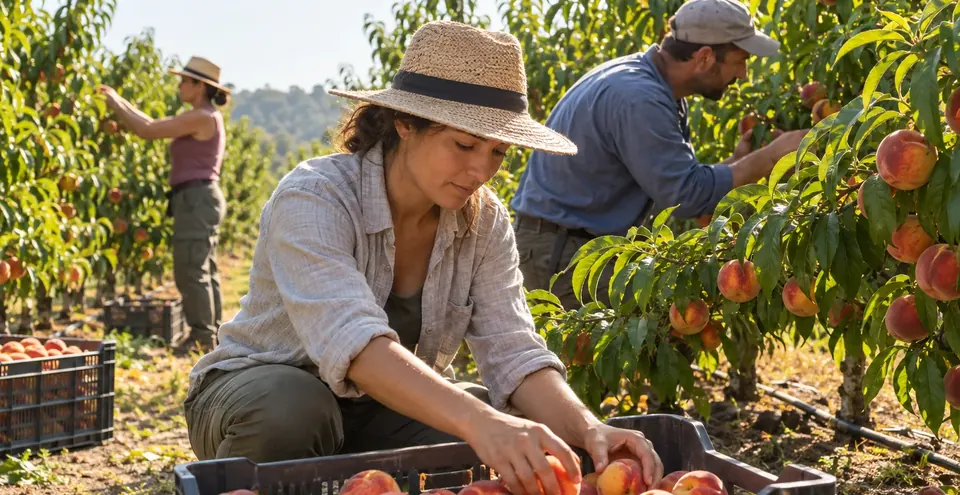
In Honduras, seasonal fruit and vegetable picking jobs are concentrated in the dry southern plains for melons and watermelons, the north coast for bananas, pineapple and citrus, and the central and western highlands for vegetables, strawberries and potatoes. Large export farms hire gangs of local workers, often by the day or by the piece, while family plots rely on relatives and neighbours. Foreigners are rarely hired because national law favours Honduran staff. Heat, pesticides and long hours make protection, written terms and clear pay rules essential.
This page in other languages : Español
Crops and regions
In the south, the departments of Choluteca and Valle, around the Pan-American Highway and the Gulf of Fonseca, turn into melon and watermelon fields during the dry months. Planting, thinning, picking and packing in sheds follow one another between roughly December and April, and the crop is shipped by truck to export markets. Workers there are mostly local families who know the farms.
The north coast has bananas in the Sula and Aguan valleys, pineapple and citrus near Atlantida and Yoro, and African palm in the Aguan. Banana work runs nearly all year, because plants fruit continuously, and consists of cutting bunches, washing, labelling and boxing in packing houses. Pineapple and citrus have sharper peaks, tied to the rains and the harvest decisions of each farm.
In the highlands around La Esperanza in Intibuca, Comayagua, Ocotepeque and Lempira, farmers grow potatoes, cabbage, carrots, tomatoes, onions, strawberries and other vegetables. The cooler climate allows several cycles a year. Picking is done by hand into sacks and crates, and carrying loads on slopes is hard on the back, particularly during the rains when paths are slippery.
Citrus is another important crop. Oranges and other fruit are grown in the departments of Cortes, Yoro and Olancho, as well as in the central valleys, and trucks carry them to processing plants and markets. Harvesters use ladders and bags, and the work requires care to avoid falls and thorn scratches. Seasonal peaks follow the ripening of each variety and the demand of juice makers.
Strawberries, tomatoes, peppers and cucumbers are also cultivated, some under plastic cover, in the cooler highlands and the central valleys. Greenhouse work is lighter on the back but hot and humid, and workers must follow hygiene rules to protect the produce. These jobs are more stable than field picking and often require training, so employers favour people who stay for several months.
Tasks, rhythm and pay
Pickers start at dawn to avoid the worst heat, walk the rows with a bucket or sack and fill boxes that are counted by a checker. In packing sheds, workers sort, wash and weigh the fruit. A normal day is long, with a short break for food, and the work is physically intense because the body is bent for hours and exposed to sun, dust and sudden rain.
Payment follows several methods: a daily wage, a rate per box or per hundred pounds, or a weekly sum agreed with a team leader. Pay for formal work should be at least the legal minimum for agriculture, which the Labour Ministry sets and updates. Ask how pieces are counted, when payment is made and whether deductions are taken for transport, food or tools.
Many workers move with their families, and children sometimes accompany parents to the field. Child labour in dangerous agricultural tasks is forbidden, and responsible employers do not allow minors to handle chemicals, machetes or heavy loads. Anyone who sees such practices can report them to the labour authorities or to organisations that defend rural workers.
Packing sheds in Honduras are often easier on the body than the fields, but they bring other burdens: cold rooms, wet floors, repetitive movements and noise from machines. Workers should receive gloves, aprons and non-slip footwear, and they have the right to breaks. Women frequently dominate sorting and packing lines, and employers should provide clean restrooms and respect for privacy.
Housing, health and protection
- Seasonal housing may be a rented room, a bunkhouse on the farm or a shared house in the village
- Drinking water, latrines and shade should be provided in the field
- Gloves, boots, hats and masks are needed when sprays are used
- Medical help is usually far from remote fields, so a basic kit is useful
Pesticide exposure is a major concern. Workers should know when a field was last sprayed, stay out during application and wash hands and clothes before eating. Dengue and heat stress are other risks, so bring repellent, drink water frequently and rest in the shade. Report symptoms such as dizziness or fever early.
Transport is a daily concern. Trucks carry workers to the fields at dawn, sometimes with no seats or seat belts, and accidents happen. Ask who organises the journey, whether the vehicle is licensed and how much time is counted as work. If housing is far from the farm, the cost and length of commuting influence the real value of the wage.
Legal protection exists even where practice is weak. Honduran law requires a weekly rest day, limits working hours and bans forced labour, and farm owners are expected to provide a safe environment. Workers and community groups can ask the Labour Ministry to inspect a farm, and international buyers increasingly demand audits that check conditions for harvesters and packers.
Harvest calendar
| Crop | Region | Usual period |
|---|---|---|
| Melon and watermelon | Choluteca, Valle | December to April |
| Coffee cherries | Copan, Lempira, El Paraiso | November to March |
| Bananas and pineapple | Sula Valley, Atlantida | Most of the year |
| Highland vegetables | Intibuca, Comayagua, Ocotepeque | Several cycles through the year |
Periods shift according to rainfall and altitude, and farm managers decide the exact start. Teams move from one crop to another, and a person with reliable references can often line up consecutive jobs. Ask neighbouring farms and cooperatives about the next cycle before the current contract ends, so that income continues without long gaps.
Legal work for foreigners in picking is uncommon, because Honduran law steers employers towards local hiring and because large farms already recruit locally. Agricultural volunteering schemes exist in some places, but they must still respect immigration rules. Check with the migration office and the agriculture ministry before committing to a stay on a farm.
Specialised workers such as irrigation technicians, tractor drivers and quality controllers earn more than general pickers. Employers train reliable people to fill these posts, especially in melon and banana operations that run for many months. A seasonal picker who learns to operate equipment safely or to check fruit quality can turn short stints into longer contracts.
Cooperatives of small farmers also hire occasional help, particularly during the coffee and vegetable peaks. The pay may be lower than on export farms, but conditions can be friendlier and tasks are varied. Visit the cooperative office, introduce yourself and ask about the next cycle, bringing a reference from a previous employer if you have one.
Before leaving your village or city to work on a distant Honduran farm, check weather forecasts, road conditions and the exact address of the farm. Tell a relative where you will be and how to reach you. Keep some money for the return trip, since this protects you if the harvest ends earlier than expected or if working conditions turn out to be unacceptable.
Common questions on harvest work
Which months are best for fruit picking in Honduras?
The dry months from December to April are busiest for melons and watermelons in the south, and coffee work also occurs from November. Bananas and pineapple provide work for much of the year. Vegetables in the highlands follow several cycles. The best choice depends on the region where you live or can travel safely.
Do pickers earn by the day or by the box?
Both systems exist. Large farms often pay a daily wage for packing or field tasks, while some operations pay by volume for picking. Ask for the rate in writing, learn how counting works and keep your own record of boxes filled each day to avoid disputes at the end of the week.
Can I get help if I am not paid?
Yes. Contact the regional office of the Labour Ministry, a workers' organisation or a legal aid service. Bring any contract, receipts, messages and the names of colleagues who saw the work. Complaints are easier to defend when workers have documents, so keep copies of everything related to the job.
Where to find these jobs
- Secretaria de Agricultura y Ganaderia (SAG) — Ministry of agriculture that supports growers, supervises plant health and runs programmes for family farms and export crops across the country.
- Fundacion Hondurena de Investigacion Agricola (FHIA) — Research foundation that studies bananas, plantain, vegetables and fruit trees and trains farmers in the north coast and other regions.
- Secretaria de Trabajo y Seguridad Social (STSS) — Labour authority that inspects farms, sets agricultural minimum wages and receives complaints about unpaid or unsafe work.
Official and legal references
- Food and Agriculture Organization of the United Nations — United Nations agency offering information on crops, rural employment and good agricultural practices in Honduras and Central America.
- International Labour Organization — United Nations agency that publishes standards on agricultural safety, child labour and fair pay for rural workers.