Kiribati: seasonal fruit and vegetable picking jobs in gardens, babai pits and coconut groves
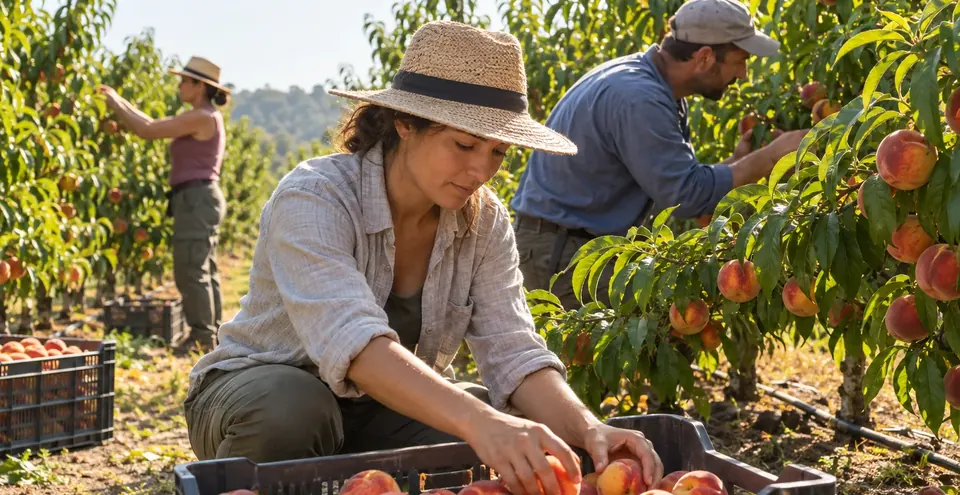
In Kiribati, seasonal fruit and vegetable picking jobs are hardly a commercial sector, because the coral atolls offer poor soil, little fresh water and limited land. Families harvest coconuts, breadfruit, pandanus, bananas, papaya and the giant swamp taro known as babai, and a few small farms on Tarawa and Kiritimati grow vegetables for sale. Paid picking is occasional and informal. For many I-Kiribati, real seasonal harvest work is found abroad, on Australian and New Zealand farms, through official labour mobility schemes.
Soil, water and what can grow
An atoll is a ring of coral sand with a lagoon in the middle. The soil holds little organic matter, rainfall is uneven and the freshwater lens beneath each island is thin and easily spoiled by salt. Gardens must be protected from wind and salt spray, and in dry years crops fail. These conditions explain why Kiribati imports rice, flour and tinned foods in large quantities.
Yet traditional farming is remarkable. Women and men dig deep pits down to the water table and fill them with compost made of leaves to grow babai, a giant swamp taro that can take years to mature. Coconut palms, breadfruit, pandanus and papaya are planted around houses, and bananas are grown in compost-filled holes. Such methods are passed within families and are central to cultural pride.
Coconut and toddy
Coconut is the most important tree. Its nuts are used for food and drink, its leaves for roofs and baskets, and its sap, tapped from the flower stalk, makes the sweet toddy called kamaimai or the fermented form. Climbing the palm to tap sap each morning and evening is skilled work, usually carried out by men, and toddy is a staple energy drink for many households.
Planting is guided by the moon and the tide in many families, and women often hold the main knowledge of gardens. Compost heaps made of leaves, fish waste and ash are essential, and each household has its own recipe. Programmes by agricultural officers now teach raised beds, mulching and the use of salt-tolerant varieties, and these activities provide short-term paid work for trainers and assistants.
Kiritimati has a different landscape. The island is larger, with more land and some brackish ponds, and in the past coconut plantations covered much of it. Small vegetable plots now supply the local population and visiting groups with cabbage, tomato, cucumber and chilli, while coconut groves employ some workers for cutting and collecting. Water remains the main limit to expansion.
The same pits and gardens attract researchers and students interested in food security and climate adaptation. Occasionally, project teams hire local assistants for surveys, measurements and demonstration plots, and these assignments last only weeks but offer paid experience in agriculture and environmental work.
Copra and cash from the land
The principal cash crop is copra, the dried flesh of the coconut. Families on outer islands cut and dry copra and sell it to the copra society at the island's buying point, from where it is shipped to Betio for processing. The government supports a guaranteed price, so copra income is a vital safety net for remote communities. Production varies with weather, ship visits and the availability of labour.
Copra cutting is hard work. Workers split husked nuts with a knife, scoop out the meat and lay it to dry for several days, then bag it for the ship. Days begin early and end with the sorting of the harvest. It is not a seasonal job for outsiders, since coconut groves belong to families, but it shows how the cash economy functions on the atolls.
| Product | Where | Work involved |
|---|---|---|
| Babai | Gilbert Islands pits | Digging, composting, planting, harvesting |
| Coconut and copra | All inhabited islands | Climbing, splitting, drying, bagging |
| Breadfruit and pandanus | Villages | Picking, preparing, preserving |
| Vegetables and bananas | Tarawa and Kiritimati plots | Planting, watering, picking, selling |
Seaweed farming has been promoted on some islands and in Kiritimati as a source of cash, with families tending lines in shallow lagoons and drying the harvest for export. It is tedious work done at low tide, and prices depend on distant markets. Results have varied, and many families continue to combine seaweed, copra and fishing to make ends meet.
Fish is, of course, the other great food. Households fish on the reef, in the lagoon and in the open ocean, and some sell their catch in the market at Betio or at the roadside. Although this is not picking, it forms part of the farm and food work that fills a family's year, and anyone staying with a household will take part in some form.
Land, work and rights
Land is held by families under custom, and strangers cannot work a plot without permission from the owners. Land is not sold to foreigners. A person who wishes to help in a garden should speak first with the head of the household and with elders, and should expect to contribute through labour, food or gifts rather than wages.
Where a paid farm job exists, such as on a small commercial vegetable plot or in a project nursery, the national labour law applies. Rates are modest, and the exact amount should be checked with the ministry. A non-citizen needs a work permit for any paid role. Volunteer placements with government or charity projects are possible but still require approval from immigration officials.
Visitors interested in Kiribati farming can still learn a great deal by joining village life with permission, listening and carrying water, since the knowledge held in these communities took centuries to build.
Overseas picking schemes and safety
Many I-Kiribati travel to Australia and New Zealand to pick fruit and vegetables for several months under regional labour programmes. The Ministry of Employment and Human Resources registers candidates, and approved employers abroad offer contracts with housing, transport and health insurance. Workers send money home and bring back savings, though long separation is demanding for families.
Fieldwork in Kiribati itself requires care. Heat, humidity, coral cuts and falling coconuts are common hazards, and clean water is scarce. Wear a hat, long sleeves and sturdy shoes, carry drinking water and keep wounds clean, because small injuries can become infected in the tropics. Do not climb palms without training. Health posts on outer islands have limited supplies.
Recruitment standards are strict. Candidates must meet age and health conditions, show good conduct and attend briefings on contracts, tax, remittances and workplace rights. The programme tries to protect workers from unfair practice, but they should still keep their own copies of every document, know the contact for the Kiribati liaison officer abroad and report concerns early.
Not everyone returns unchanged. Workers learn new farm techniques, become used to different foods and save to build homes in Tarawa or to buy boats and trucks. Families use money wisely when they plan together, and local pastors and community leaders frequently help to manage expectations and avoid conflict while the workers are away.
Farming questions
Is there a harvest season for visitors to join?
No. Harvests are family activities and cash work is scarce. Visitors may learn about babai pits and coconut tapping as guests of a household but should not expect wages.
What do people harvest most?
Coconuts, breadfruit, pandanus and babai are the main foods, with bananas and papaya. Vegetables grow on small plots in Tarawa and Kiritimati using imported soil or compost.
Where can I-Kiribati find farm jobs abroad?
Through official registration at the labour ministry. Beware of agents who ask for fees in return for guaranteed work.
Where to find these jobs
- Ministry of Environment, Lands and Agricultural Development — Government ministry supporting farmers with advice, land matters and food security projects on the islands.
- Kiribati Copra Cooperative Societies — Island cooperatives that buy copra from families and organise shipment to the processing mill in Betio.
- Ministry of Employment and Human Resources — Government ministry registering workers for overseas farm schemes and handling labour matters and work permits in Tarawa.
- Kiribati Institute of Technology — Public technical institution in Betio offering vocational training that includes practical skills used in gardening and building.
Official and legal references
- Pacific Community — Regional organisation offering technical advice on agriculture, food security and labour mobility for Pacific island countries.
- International Labour Organization — United Nations agency setting international labour standards and offering guidance on rural work, wages and workers rights.