Monaco: seasonal holiday resort activity leader jobs in leisure centres, sailing, beach clubs and guiding
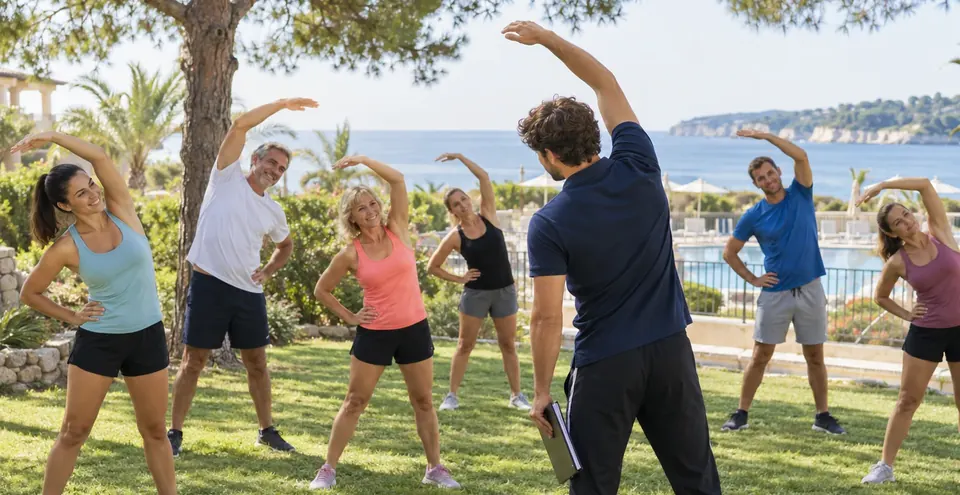
In Monaco, seasonal holiday resort activity leader jobs are few and specialised, because the principality has no club-hotel industry and little room for large animation teams. Work exists in children's holiday centres, sailing and sports schools, beach clubs, guiding and event hosting around the port and the Palace. Leaders supervise young people, run activities and welcome visitors in French and English. Qualifications, a clean record and the right authorisation are essential, and many posts go to residents or commuters who are already known to the organisers.
This page in other languages : Français
What leisure work really exists
Visitors who expect an all-inclusive resort with nightly shows will not find it in Monaco. Hotels here focus on luxury service, spas and gastronomy rather than on animation, and the principality's size leaves little space for large entertainment programmes. The leisure sector is therefore built around public institutions, clubs and events, with a small number of seasonal posts for activity leaders.
Youth activities form a core group. During school holidays, the Government's education and youth department organises leisure and holiday programmes for children, with sports, swimming, crafts and outings, and these need supervisors and instructors. The Stade Louis II complex in Fontvieille, with its pools and sports halls, and various clubs run courses that employ coaches, lifeguards and assistants for the summer months.
The sea adds a distinctive dimension. The Yacht Club de Monaco runs sailing courses for young people, and diving, paddle and swimming operators work from the Larvotto and Fontvieille shores. Beach clubs organise activities for children and adults during the warm months, and boat excursions along the Riviera need hostesses, crew and guides who can speak several languages.
Beach clubs and hotels sometimes employ people with a specific talent. A musician who can play at a lounge in the evening, a fitness instructor who leads morning classes by the pool, or a swimming coach who teaches children can find short engagements when guests ask for them. These posts are usually arranged through the venue manager, and they are more informal than a full animation team, though they still require contracts and permissions.
Qualifications and languages
French is the working language of public programmes, and English is essential for international visitors and boat trips. Italian, Russian and Arabic are valuable in luxury tourism. Leaders should be at ease with children and adults, comfortable in a polished environment and aware that discretion is part of the job, since clients may be well-known figures who expect privacy.
Formal qualifications matter. Sports and leisure leaders in France hold diplomas such as the BAFA for holiday camps or the BPJEPS for sports instruction, and similar recognised certificates are expected in the principality. Lifeguards need the relevant national certification, sailing instructors need federation qualifications, and guides need training that covers history, art and the layout of the Rock and the Palace.
| Activity | Typical requirement | Main season |
|---|---|---|
| Holiday centre leader | Youth leadership diploma, first aid | Summer and school breaks |
| Sailing instructor | Federation qualification | April to October |
| Lifeguard | Recognised lifesaving certificate | June to September |
| Guide or host | Languages, local knowledge | Spring to autumn |
| Beach club animator | Languages, sports skills | May to September |
Guiding at the Palace and the Old Town is a classic seasonal job. The Changing of the Guard takes place each day before noon, the State Apartments open to visitors for part of the year, and the narrow streets of Monaco-Ville host museums and the cathedral where the princes are buried. Guides need a thorough knowledge of the Grimaldi dynasty, which has ruled since the thirteenth century, and the ability to tell the story clearly in several languages.
Child safety and legal rules
People who work with children in Monaco are expected to meet high standards. Organisers check identity, qualifications and references, and may ask for a certificate showing no criminal record, from the home country for foreign applicants. Supervision ratios, medical information and emergency procedures are applied strictly, and staff must report concerns to the director without delay.
Water activities bring extra duties. Swimming and sailing sessions require trained supervisors, appropriate flotation equipment and weather checks, and instructors should know the procedures of the harbour and the sea rescue services. If you assist on a boat excursion, you must follow the captain's instructions and carry out the safety briefing given to passengers.
Employment rules apply fully. A written contract approved by the Labour Department is required, priority of employment limits openings for outsiders, and non-resident workers should check their right to cross the border daily. Volunteer arrangements may also be subject to regulation, so ask the organiser how the position is classified before you accept.
Cultural and sporting events open up further tasks. The Grimaldi Forum hosts exhibitions and shows, tennis and athletics events take place in Fontvieille and Roquebrune, and the harbour hosts regattas. Organisers need hosts, ushers, volunteers and people able to explain rules to young spectators. Such jobs are short but memorable, and they offer a way to work alongside professionals from many countries.
Pay, accommodation and applications
Pay depends on the employer, the qualification and the hours. Public programmes follow set scales, while private clubs and beach operators negotiate individually. The cost of living is high, so check the total package carefully, including transport, meals and uniforms. Some employers provide meals, and others reimburse part of the travel between Monaco and the home town in France or Italy.
Accommodation inside the principality is rarely available to seasonal staff. Most leaders live in nearby French towns such as Beausoleil, Cap-d'Ail or Menton, or in Italian Ventimiglia, and use the train, which runs along the coast and stops at Monaco-Monte-Carlo station. Ask for the hours of your shifts and compare them with train timetables before accepting a late-evening post.
Applications go directly to organisers. Send a French curriculum vitae with your qualifications, languages and references, and attach a photograph. Tourism offices, clubs and the Government's youth department publish recruitment calls in spring for the summer. For boat and beach jobs, apply in March and April, and follow up politely if you do not receive a reply within a week or two.
A realistic outlook protects your plans. Competition for the few posts is strong, and priority of employment limits opportunities for newcomers. Applicants who live in the region, hold the right qualifications and speak French have the best chance. If you do not meet these conditions, look at resorts in the French and Italian Riviera, where more animation work exists, and treat Monaco as a prestigious addition to a career rather than the starting point.
Language training can open doors. Evening classes in French, English and Italian are available in Nice, Menton and Monaco, and many online courses allow you to prepare before arrival. Employers appreciate applicants who can welcome guests in two or three languages and who understand cultural differences, for example between Italian and Russian-speaking visitors. A short certificate of language level, attached to your application, helps managers to assess your skills quickly.
Questions from future leaders
Does Monaco have holiday clubs with animation teams?
Not in the style of Mediterranean club resorts. Activity work is linked to youth programmes, sports, sailing, beach clubs and guiding, and numbers are small.
Is a French diploma required?
Recognised qualifications are expected, such as holiday camp or sports instruction diplomas. Foreign certificates may be accepted, but check with the organiser or the authorities before applying.
Can students apply?
Yes, particularly for summer holiday programmes and beach clubs, provided they have the right to work, languages and the required certificates. Students with youth work training are often welcomed.
Where to find these jobs
- Yacht Club de Monaco — The sailing club that offers courses for young people and organises regattas and events, employing instructors and assistants during the season.
- Government of Monaco Labour Department — The state service that approves contracts and explains employment rules for people who want to work in the principality.
- Visit Monaco — The tourism and convention authority that promotes events, guided tours and seasonal leisure activities in the principality.
- Société des Bains de Mer — The hospitality group that operates beach facilities, hotels and entertainment venues and recruits staff for guest activities in season.
Official and legal references
- Government of Monaco official portal — The official portal in English with information on youth and sports services, employment rules and procedures in the principality.
- Visit Monaco official tourism website — The official tourism website in English presenting guided tours, sea activities, beaches and events throughout the year.