Eritrea: seasonal holiday resort activity leader jobs, guides, boat crews and youth activities
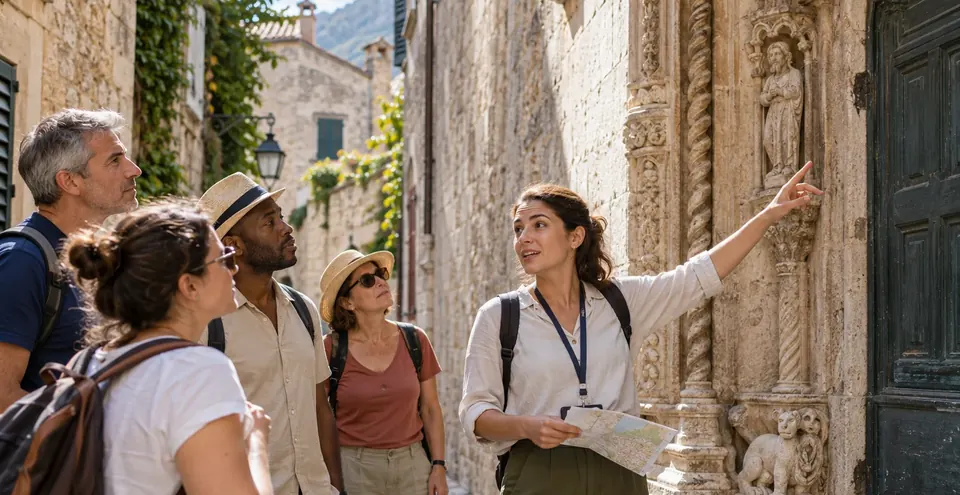
In Eritrea, seasonal holiday resort activity leader jobs are scarce and modest in scale, because the country has no holiday clubs or large resorts and tourism is small and state-supervised. Leader-type work consists of guiding visitors through Asmara's architecture, taking boat trips to the Dahlak islands, accompanying excursions to Keren and archaeological sites, and running youth sport and cultural events. Posts are normally filled locally by licensed guides and organisations, and foreign applicants have no open route to such employment without official authorisation.
What tourism looks like
Eritrea receives few visitors compared with its heritage and landscape. Asmara's cinemas, cafes, futurist and art deco buildings, such as the Fiat Tagliero service station and the Cinema Impero, make it an unusual city to explore on foot, and the narrow-gauge railway to Massawa with its mountain tunnels fascinates enthusiasts. Visits are generally organised, and some travel outside the capital requires permits arranged through authorised operators.
On the coast, Massawa's old town, with its coral-stone houses and mosques, the beaches near Gurgussum and the Dahlak archipelago attract divers, birdwatchers and people who want an unhurried escape. Boat trips to Dahlak Kebir and other islands are run by local crews, and the coral reefs and sea birds are the principal attraction. The cooler months are the best time for these excursions.
Inland, travellers visit the Monday market of Keren, the monastery of Debre Bizen, the ancient ruins of Qohaito and Adulis, and the rock landscapes near Mendefera and Dekemhare. Guides who know the history, languages and etiquette of each place are essential, and most are licensed or engaged by official tourism bodies. There is no tradition of animated holiday villages with entertainment teams.
Cultural events provide another type of engagement. The Festival Eritrea in Asmara, held in the summer, includes concerts, dance troupes, food stalls, children's activities and exhibitions, and it relies on large numbers of volunteers and staff for stage work, hospitality and information services. Taking part, whether as a resident or an invited participant, is a chance to learn how public events are organised.
Roles that exist in practice
The typical roles are city guide, cultural guide, driver-guide, boat captain and deckhand, dive support, interpreter and tour coordinator. For residents, youth sport and cultural activities add a second field: football, cycling, athletics and music are popular, and schools, churches, sports clubs and community centres organise events and holiday programmes. Leaders in these settings are usually volunteers or members of the organisation.
| Setting | Typical activity | Best period |
|---|---|---|
| Asmara | Architecture walks, cafe and market visits, cultural evenings | Winter months and festival weeks |
| Massawa and Dahlak | Boat trips, snorkelling, island visits | November to February |
| Keren and Qohaito | Market visits, archaeological and monastery excursions | Dry months |
| Schools and clubs | Sport days, music, youth programmes | School breaks |
Languages matter. Tigrinya is the everyday language, Arabic is common on the coast, and English is the main language for international visitors. Some guides speak Italian, a legacy of the colonial period, and a few know German or French. Storytelling skills, patience with questions and a sound knowledge of history, from ancient trade routes to the independence struggle, give a guide credibility.
Music and dance are central to social life. Each ethnic group has its own traditional dances, from the shoulder movements of the Tigrinya to the rhythms of the Kunama and the sword dances of the Beni Amer, and young people learn them at community centres. Instructors who can teach steps, songs and instruments to children and teenagers are respected, and cultural centres in Asmara run classes during school holidays.
Training is available through schools, sports federations and the tourism sector. Courses in first aid, guiding, languages and sports coaching are offered in Asmara, and the Red Cross provides first-aid instruction. A leader with a recognised certificate stands out and can supervise others, which is useful when groups of children or large delegations visit for special events.
Safety, rules and responsibility
Visitors in Eritrea must follow official rules, which may include travel permits, restrictions on photography of certain sites and limits on movement. A guide has to know these rules, brief guests and ensure that the group stays within what is allowed. Boat operations require suitable vessels, life jackets and a plan for emergencies, because the sea can be rough and the heat is intense.
When working with children and young people, strict protection standards are essential: never be alone with a minor, obtain parental consent for outings and keep a headcount at all times. Respect for local culture, modest dress and sensitivity to religion and customs are part of the profession. Basic first-aid skills and awareness of heat illness are highly recommended.
- Check current permit requirements with the authorised tour operator before every excursion.
- Carry water, sun protection and a first-aid kit on all trips.
- Never photograph military, port or government installations.
Diving and snorkelling in the Red Sea are the most specialised skills. The Dahlak archipelago has coral reefs, fish and seabirds, and visits require suitable boats, safety equipment and authorisation. Guides must know the reefs, the tides and the weather, watch for jellyfish and sharp coral, and protect the environment by avoiding anchoring on reefs. International dive certificates are valued, and visitors expect a high safety standard.
Sports clubs and schools run holiday sessions in football, cycling, athletics and volleyball. Eritrea has a strong tradition in cycling, and young riders train on the roads around Asmara, while football is the most popular game in neighbourhoods and schools. A coach or monitor who helps with training sessions and tournaments gains experience and local respect, and may be asked back when the next school break arrives.
Approaching the sector
Opportunities arise through licensed travel agencies in Asmara and Massawa, the national tourism services and community or sports organisations. Applicants are usually residents with local networks. A foreigner needs a visa and specific authorisation for any work, and should not accept offers that cannot be traced to a registered body. Payment is often modest and may combine a wage, meals and tips.
For those with a family connection or an international placement, a good approach is to present certificates in guiding, first aid or sports coaching, show language skills and ask for a trial excursion. Meanwhile, learn about the country's history and etiquette, and prepare to work with patience in a setting where the visitor economy is still modest.
Finally, bear in mind that work in this field involves a personal commitment. Pay is modest, hours are long, and the setting requires patience with official procedures. Yet for those with a genuine connection to the country, leading a group of children along Asmara's boulevards or a boat trip toward the Dahlak islands can be a rewarding way to share the culture of Eritrea.
Timing is practical as well: apply a few weeks before the cooler months begin, confirm in writing who is responsible for transport, meals and lodging during each assignment, and keep a short logbook of the excursions you lead, because a documented record helps when you ask for a reference from the operator or the tourism authority.
Questions and answers
Does Eritrea have holiday clubs with entertainers?
No. The tourism sector is small and focused on culture, architecture and the coast, so leader roles are mainly guides and boat crews.
Do I need a licence to guide?
Guides normally work through licensed operators and official tourism bodies. Ask the tourism ministry or an authorised agency about current requirements.
Which months suit boat trips?
Roughly November to February, when the heat is less severe. The summer sea is very hot, and few trips run then.
Where to find these jobs
- Ministry of Tourism of Eritrea — Government ministry that licenses guides and agencies, manages visitor information and promotes Asmara, Massawa and heritage sites.
- Eritrean National Football Federation — National sports federation that coordinates football and youth competitions, offering coaching and programme experience for leaders.
- Licensed travel agencies in Asmara and Massawa — Registered tour operators that arrange permits, transport, guides and boat trips for authorised visitors in the country.
Official and legal references
- UN Tourism — United Nations specialised agency offering standards on guide training, safety and responsible tourism development worldwide.
- Shabait, Ministry of Information of Eritrea — Official government portal with news, tourism announcements and information about national events and institutions.