Uruguay: seasonal fruit and vegetable picking jobs in Salto, Canelones and the wine country
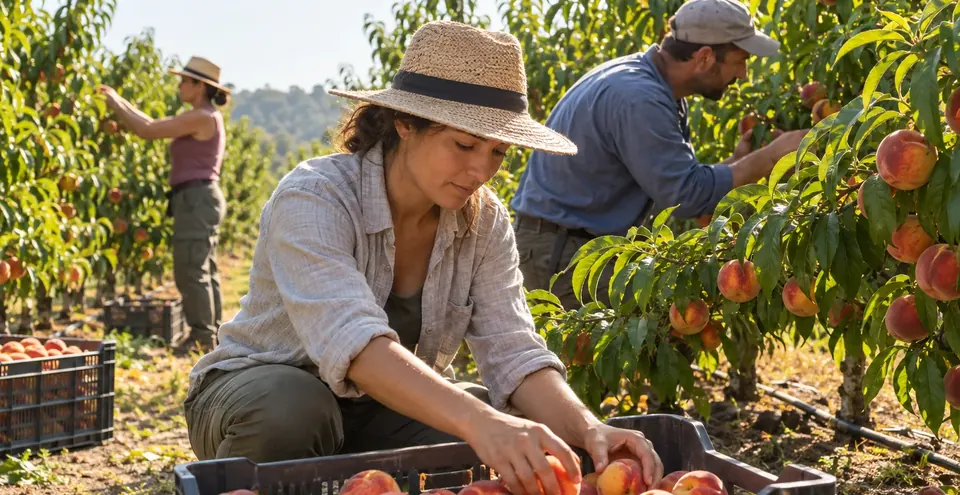
Uruguay's citrus belt around Salto and Paysandú, the vineyards and market gardens of Canelones and the greenhouses of the north create seasonal fruit and vegetable picking jobs for several thousand people each year. Oranges, mandarins and lemons are picked mainly from autumn to early spring, grapes in late summer, blueberries in spring and vegetables across the year. Workers are protected by a rural labour statute, pay is set through wage councils, and most posts go to residents who hold the right documents and a bank account.
This page in other languages : Español
Crops, regions and calendar
The northwest is the main fruit region. Salto and Paysandú, along the Uruguay river, concentrate citrus groves, packing plants and export operations, with oranges, mandarins and lemons picked from roughly April or May until the spring. The same area has greenhouses for tomatoes, peppers and strawberries and a growing blueberry sector, whose fruit is picked in the last months of the year to reach northern hemisphere markets in winter.
In the south, the departments of Canelones, San José and Montevideo, where the rural belt reaches the edge of the capital, grow vegetables for the national market. Onions, potatoes, sweet potatoes, pumpkins, tomatoes, lettuces and sweet corn are harvested in different months, and the zone also has peaches, plums, apples and pears. Peach picking falls in the first weeks of the year, while apples and pears come in late summer and autumn. Smallholders work in family units, so the farm often hires only a handful of extra pickers for a week or two and prefers people recommended by neighbours.
Wine grapes are the pride of the south and west. Vineyards in Canelones, around Colonia and Carmelo, and in Maldonado harvest from about February to April, with the tannat variety as the national flagship. The vendimia employs crews of pickers, and wine cellars hire extra staff for sorting, pressing and cleaning, while many small family farms still pick by hand and welcome helpers from the neighbourhood. Harvest festivals in the wine towns add temporary work in catering, tasting rooms and event teams, and some estates organise guided visits during the vendimia that need bilingual guides.
| Crop | Main departments | Usual picking period |
|---|---|---|
| Oranges, mandarins | Salto, Paysandú | Autumn to early spring |
| Blueberries | Salto, Río Negro | Spring and early summer |
| Peaches, plums | Canelones, Montevideo | Early summer |
| Wine grapes | Canelones, Colonia, Maldonado | Late summer to early autumn |
| Onions, tomatoes, potatoes | Canelones, San José, Salto | Different months through the year |
Tasks and rhythm of the work
Citrus picking is done with ladders, clippers and large sacks that are emptied into bins at the edge of the row. Pickers must cut the stem close to the fruit, avoid dropping oranges and keep to the quality required by the packing plant, which grades, washes, waxes and packs the fruit for export or the local market. Teams are supervised by foremen, who count the production and organise transport.
Vineyard work involves cutting bunches with shears, filling crates and carrying them to the end of the row. In market gardens, workers bend to harvest leaf crops, pull onions, dig potatoes and load boxes in the early morning, when it is cooler. Greenhouses are hot and humid, and workers need water, breaks and clothing that can be changed, since the contrast with the outside air can be strong.
Packing and sorting offers an alternative for people who prefer to avoid the sun. Women and men stand at lines to select fruit, label boxes and load pallets, often on a shift system in the busy weeks. Machine operators, forklift drivers and cold room staff earn more but need training, and many packing plants in the north prefer to rehire experienced seasonal staff. A seasonal worker who returns for several campaigns can be promoted to team leader, quality controller or machine operator, and these posts bring higher and steadier pay and more continuity across the months.
Pay, contracts and protection
Rural workers in Uruguay are covered by a specific statute that includes a daily working hour limit, weekly rest, extra pay for overtime, accident insurance and rules on food and lodging. Wages are agreed in wage councils for the agricultural sector and may differ between citrus, horticulture, vineyards and other categories, so ask for the current agreement.
Many employers pay a daily wage, and some pay by output, for example by the bin or the crate, particularly for piece-rate tasks. The pay slip should show the days worked, the rate, the deductions and the contributions to social security. Employers must register their workers, and the social security institution can confirm whether a contract has been declared.
Rural unions and the labour inspectorate defend workers who face unpaid wages, unsafe transport or poor housing. Complaints are rare but possible, and they are taken seriously because the sector exports to markets that require social and environmental audits. Keep copies of documents, ask for the name of the real employer when a contractor recruits you and avoid cash deals without paper. In Uruguay, such written records are the strongest proof when a dispute arises over hours, wages or the end of an engagement.
Health, housing and finding work
- Pesticide safety: use gloves, masks and washing facilities when they are provided.
- Sun and heat: wear a hat, drink water and rest in shade at midday.
- Transport: do not accept rides in unsafe vehicles or overloaded trucks.
- Documents: keep your identity card, contract and payslips together.
Housing for rural workers varies. Some farms and packing companies offer shared rooms or houses, while others rely on workers who live in nearby towns such as Salto, Paysandú, Las Piedras or Canelones city. Ask about the condition of the house, who pays for electricity and water, and whether the bed is lost when the job ends.
The best sources of jobs are direct contact with farms and packing plants, local radio, municipal offices and the national employment institute, which runs courses and job exchanges. Associations of growers, the agriculture ministry and the national research institute can describe production zones. Applications for the citrus campaign start in March and April, and for the vendimia in January and February.
Foreign residents must have the right to work, and Mercosur citizens can use the regional residence agreement. A tourist cannot take a regular job, and an employer who hires without papers risks fines. Visitors who want to see harvests can book vineyard or farm tours, which offer an understanding of the work without legal risk.
Frequently asked questions
Which is the longest picking season in Uruguay?
Citrus has the longest season, since oranges, mandarins and lemons are picked from autumn into spring, and packing continues for several months. Vegetables extend work across the year in the south, while grapes and blueberries are shorter campaigns. A worker who moves between crops can find work for most months, although regions and employers differ.
Do pickers receive meals and housing?
Some employers provide meals, accommodation or transport, particularly in remote areas, and the rural statute contains rules on food and lodging. In many cases, workers live at home and travel to the farm. Agree in advance on what is included and on any deduction, and ask for it to be written in the contract.
Can I join a harvest as a volunteer or tourist?
Visiting a farm or a vineyard as a guest is possible, and some wineries welcome participants in a symbolic grape picking. Regular work without a status that permits employment is not allowed and leaves you without social security. If you want longer stays, ask the employer about a legal contract and the immigration directorate about the right category.
Where to find these jobs
- Ministry of Livestock, Agriculture and Fisheries — Government ministry that supports farmers and horticulture and publishes information on production zones and programmes.
- INIA — National agricultural research institute that studies citrus, fruit, vegetables and grapes and advises growers.
- INAVI — National institute of viticulture that regulates and supports the wine sector and its harvest.
- Ministry of Labour and Social Security — Government ministry that supervises rural labour rules, wage agreements and working conditions.
Official and legal references
- Uruguay XXI — National promotion agency that presents the agricultural and fruit sectors of the country in English.
- Food and Agriculture Organization — UN agency that publishes information on crops, rural employment and food systems around the world.