Panama: seasonal holiday resort activity leader jobs, from beach clubs to canal tours and rainforest guiding
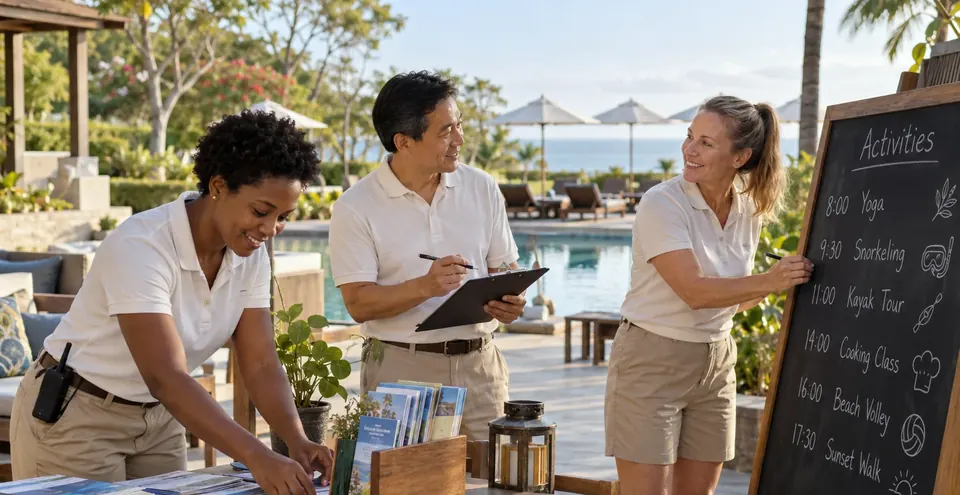
In Panama, seasonal holiday resort activity leader jobs appear in the all-inclusive beach resorts of Cocle and Panama Oeste, on the Amador causeway and cruise terminals, in the eco-lodges of Boquete, Bocas del Toro and the Pearl Islands, and in community tours along the Chagres River and Guna Yala. Roles include sports host, children's club leader, snorkel and dive guide, bird guide, kayak leader and cultural presenter. Spanish and English are essential, first aid and child safeguarding are expected, and a foreign worker must hold a permit linked to an employer.
This page in other languages : Español
Where leisure staff are needed
The Pacific coast of Cocle, around Farallon, Playa Blanca and Rio Hato, holds large beach resorts that run daily programmes with pool games, evening shows, sports and children's clubs. Families from the capital and international guests visit in the dry season and holiday weeks. Teams are mostly Panamanian, with a few specialists such as dive masters and musicians.
Panama City offers guiding, city tours and canal experiences. Visitors tour Casco Viejo, the Miraflores Locks viewing centre and the Amador causeway, and cruise passengers arrive on shore excursions. Guides explain history, from colonial times to the canal, and need good language skills, route knowledge and the ability to keep time while managing groups in heat and traffic.
Island and nature destinations are growing. Bocas del Toro has snorkelling, dolphin watching, kayaking and surf lessons, while the Pearl Islands, Coiba National Park and the Gulf of Chiriqui attract divers and whale watchers. In the highlands, Boquete offers hiking, coffee tours, zip lines and bird walks. Community tours on the Chagres River and in Guna Yala are led by local residents.
Cruise and canal tourism offers another path. Guides on partial canal transits, onboard naturalists and shore-excursion hosts work with international operators that employ people with several languages. Posts are arranged by the companies, and they require good health, identification documents and, sometimes, a short training course on safety and customer service before the season begins.
Skills and certifications
Technical posts require proof. Dive instructors, snorkel guides, kayak leaders and zip-line staff need recognised training, first aid and rescue skills. Boat captains must hold licences, and guides in protected areas follow rules set by the authorities. Employers check certificates and may ask for practical tests before hiring.
Languages carry weight. Spanish carries daily work, English serves most international guests, and German, French, Italian and Portuguese help with specific groups. Presentation skills, humour and respect for local culture distinguish a good leader. In indigenous communities, learning basic greetings and local rules of conduct is part of professional behaviour.
Entertainment roles need creativity. Resort hosts plan games, quizzes, dance classes, shows and children's activities, and they work evenings and weekends. Rehearsals, costumes and sound equipment must be arranged in advance, and staff should be ready to adapt to rain, power cuts or changes in guest numbers.
Cultural knowledge sets good Panamanian guides apart. In Casco Viejo they explain the French and Spanish colonial architecture, the story of Panama la Vieja and the canal's construction, while on the Chagres River they present Embera life through community hosts. Reading widely, visiting museums such as the canal museum and listening to elders in each community gives a guide stories that no script can replace.
Practical fitness matters, too. Guides climb in Boquete, walk hills in El Valle de Anton and paddle in the lagoons of Bocas del Toro, often several days in a row. Training regularly, drinking enough water and taking medical advice before the season prevents injuries. Employers notice who is still smiling on the fifth consecutive day, and those people receive the best groups and the most reliable schedules.
Safety and child protection
- Check equipment before each activity and keep a written record
- Respect protected areas, wildlife distance and local communities
- Cancel or change an activity when sea or weather conditions are unsafe
Boat safety is a separate subject in Bocas del Toro, Pearl Islands and Coiba. Captains must carry life jackets for everyone, check weather and tides before leaving the dock and refuse to overload the boat. Activity leaders aboard should count guests at every stop, know where the first-aid kit and radio are kept and be able to describe the position to rescuers. Training for these routines is a normal part of an engagement.
Heat and sun are constant hazards on beaches and at the canal's open viewing decks. Staff should schedule vigorous games for the cooler hours, supply water at every session and watch children for flushed faces, headaches and unusual tiredness. A shaded rest corner, hats and sun cream stored in the activity room are cheap measures that prevent most heat problems and show parents that the team takes their children seriously.
Typical jobs and seasons
| Place | Typical job | Busy period |
|---|---|---|
| Cocle beach resorts | Sports host, children's club leader | December to April and holidays |
| Panama City and Amador | City and canal guide, cruise host | Dry season and cruise calls |
| Bocas del Toro | Snorkel, kayak and boat guide | Dry months and holidays |
| Boquete and highlands | Hiking, coffee and bird guide | December to April |
Environmental responsibility is part of the work. Visitors must not touch coral, feed fish or approach nesting turtles, and groups should be kept small on trails and beaches. A leader who explains why rules exist, and who removes litter, teaches by example.
A good leader can progress to coordinator, trainer or manager. Experience in a resort or lodge in Panama can lead to roles with tour operators, hotel groups or cruise companies, and records of groups led, guest feedback and certificates help each application. Many people alternate seasons between Pacific beaches and mountain lodges to keep year-round work.
Whale watching adds a second leisure season between July and October. Humpback whales travelling from the southern oceans breed and calve in the Gulf of Panama and around Coiba, and naturalist guides, boat crews and hotel hosts at Pedasi, the Pearl Islands and Isla Contadora work long days on the water. Guides must teach guests the approach distances and speed limits that protect mothers and calves.
Hosting at an all-inclusive resort has its own routine. The team usually meets before breakfast, plans pool games, a dance class and a children's session, and then repeats the cycle in the afternoon before an evening show. A leader who can swap tasks, cover a sick colleague and keep a smile after a ten-hour day becomes valuable, particularly during the long school holidays in January and February.
Cruise passengers want short, lively experiences. Excursion leaders at Colon, Amador and Bocas collect guests from the pier, introduce the bus driver and the day's plan, and keep the group on schedule so that nobody misses the ship's departure. Handling complaints with humour, carrying a spare map and counting heads at every stop are the habits that make a good leader on these tight, single-day programmes.
Questions on leisure work
Do all-inclusive resorts in Panama hire foreign entertainers?
They sometimes do, mostly for specialised roles such as dance, music, diving or language-based activities, and only with a permit arranged by the employer. Most hosts and guides are Panamanian. Ask the resort for written confirmation of the permit route and of working conditions before accepting an offer.
Panama: do I need a licence to guide visitors?
In most cases yes. Guides and operators generally register with the tourism authority, and protected areas such as national parks add their own permits and fees. Requirements differ by activity and by whether you are a resident or a foreigner, so ask the employer to show which authorisation covers you, and keep copies of every certificate and licence with you at work.
Panama: which languages help me most?
Spanish and English are the base. Add German, French, Italian or Portuguese if you aim for upscale resorts or cruise work. In communities such as Guna Yala or Embera villages, respectful use of a few local words earns trust, though hosts usually speak Spanish with visitors.
Where to find these jobs
- Autoridad de Turismo de Panama (ATP) — Government tourism authority that registers guides and tour operators, promotes beaches, islands and nature destinations and sets quality rules.
- Instituto Nacional de Formacion Profesional y Capacitacion para el Desarrollo Humano (INADEH) — Public training institute with courses in tourism services, languages and first aid that help candidates prepare for leisure posts.
- Ministerio de Trabajo y Desarrollo Laboral (MITRADEL) — Labour ministry supervising seasonal contracts, working hours and the registration of leisure staff with social security.
- Camara de Turismo de Panama (CAMTUR) — Private tourism chamber that gathers hotels, resorts and tour firms and supports training and standards for leisure staff.
Official and legal references
- International Labour Organization — United Nations agency with standards on working hours, safety and decent conditions for tourism and recreation workers.
- World Bank — International institution publishing economic data on Panama that explain tourism demand and the setting for resort employment.