Albania: seasonal fruit and vegetable picking jobs in olives, citrus, grapes and greenhouses
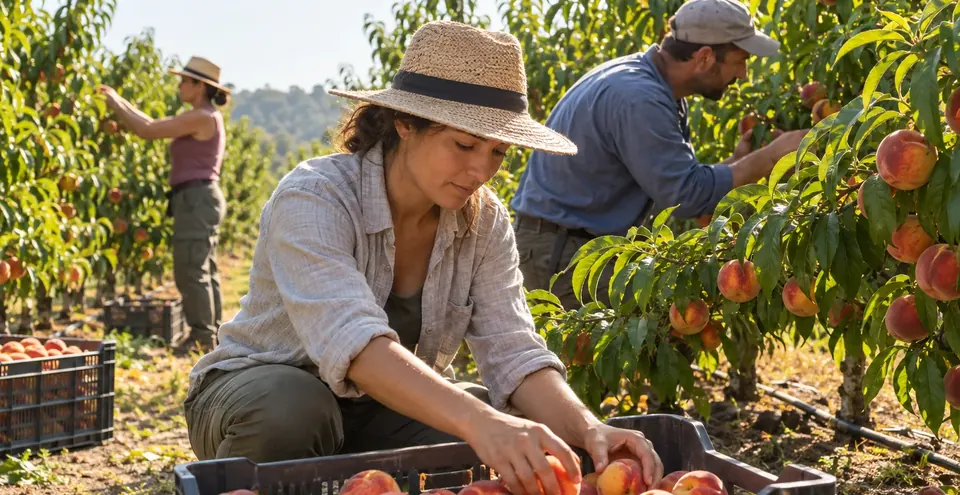
Albania offers seasonal fruit and vegetable picking work wherever crops ripen by hand, from greenhouse tomatoes in the lowlands to olives, citrus and grapes later in the year. Pickers gather produce for local markets and for processors, usually on short contracts that end when the harvest does. Harvest jobs of this kind attract rural residents, students and sometimes workers from other regions, and they differ greatly by crop, altitude and farm size. Knowing which fruit ripens in which month helps a job seeker decide where and when to look for agricultural work.
Seasonal fruit and vegetable picking in Albania: crops by region and month
The agricultural calendar begins in spring in the greenhouses of Lushnjë, Fier, Divjakë and Vlorë, where tomatoes, cucumbers, peppers and lettuce are picked from March to June. Strawberries and cherries add short bursts of work, and in early summer the Myzeqe plain turns to watermelons, melons and open-field tomatoes, which are picked in the heat of June, July and August.
Labour supply in agriculture has changed. Rural depopulation and migration abroad have made it harder for some growers to find pickers, and wages in harvest work have risen in many areas. Growers in the south sometimes bring workers from northern villages by bus, while others hire students and unemployed neighbours. This shortage gives dependable pickers some bargaining power, particularly at the peak of the olive harvest.
Late summer and autumn bring fruit from the hills. Grapes are harvested from September in Berat, Lushnjë, Durrës and Shkodër, both for the table and for wine and raki, while Korçë produces apples and plums in the cooler uplands. Figs and pomegranates ripen in the south, and walnuts and chestnuts are gathered in mountain villages as the days shorten.
Olives and citrus close the year. Harvesting olives takes place from October to December in Vlorë, Berat, Elbasan, Krujë, Mallakastër and the Ionian coast, where old trees with silver leaves cover terraced slopes. Mandarins, oranges and lemons near Sarandë, Delvinë and Lukovë are picked from November to February, offering work when the beach season has ended.
The tasks and the pace for harvest work in Albania
Harvesting in greenhouses is done at heights that limit sun exposure, but heat and humidity inside plastic tunnels can be intense. Workers pick, sort and carry crates to a collection point, and a day often starts at six in the morning and ends in the early afternoon. Field crops such as watermelons require lifting heavy fruit onto trucks, which is tiring and calls for team work.
Weighing and recording harvests is a key moment of the day. Whether pay is per crate, per bag or per kilogram, ask to see the scale, check the count with the foreman and note your own total in a notebook. Disagreements are easier to settle when both sides keep records. Fair farmers pay for the real weight and do not subtract large amounts for dirt or leaves.
Packing and processing add jobs after the field. Olive mills in Vlorë, Berat and Kavajë press the fruit within hours, and workers load, wash and bottle oil. Fruit and vegetable depots grade and pack produce for supermarkets and markets, and herb businesses in the north dry and sort sage, oregano and chamomile gathered in the mountains. These posts last several weeks and are less strenuous than fieldwork.
Olive harvesting is gentler but lasts weeks. Pickers lay nets beneath the trees, comb the branches with small rakes or by hand, and pour the olives into sacks that are taken to a press. Grape harvesting involves cutting bunches and filling crates, often in family groups. In all cases, boots, gloves, a hat and plenty of water are the basic equipment.
| Crop | Harvest months | Main areas |
|---|---|---|
| Greenhouse vegetables | March to June | Lushnjë, Fier, Divjakë |
| Watermelons and melons | June to August | Myzeqe plain |
| Grapes | September to October | Berat, Lushnjë, Shkodër |
| Olives | October to December | Vlorë, Berat, Elbasan |
| Mandarins and oranges | November to February | Sarandë, Delvinë |
Pay, housing and protection for harvest work in Albania
Payment methods vary. Most seasonal pickers are paid a daily wage in cash, while some farmers pay per kilogram or per crate, particularly during the olive and grape harvests. Agree on the rate before work starts, ask when payment will be made, and be wary of promises to pay everything at the end of the season. The legal minimum wage applies to employees, and the State Labour Inspectorate can explain it.
Health and safety need attention in fields and greenhouses. Heat stress is common in the plastic tunnels of Lushnjë and Fier, and sprays are used on many vegetable crops, so ask about protective equipment and re-entry intervals. Olive pickers work on ladders and slopes, which can lead to falls. A responsible farmer provides first-aid supplies and does not ask people to work in a storm or in extreme heat.
Housing is usually the worker's own responsibility, because many pickers live in nearby villages and commute by minibus or on foot. Where a farmer houses workers, check water, toilets and cooking arrangements. Larger agribusinesses in the Myzeqe plain sometimes organise transport from town. A good employer provides drinking water and shade, and respects breaks during the hottest hours.
Informality is widespread in agriculture, which can leave workers without health insurance or pension credit. Ask whether the employer will register you, and seek advice from a union or the labour inspectorate if you work for several weeks without any paper. Child labour in fields is illegal in hazardous tasks and young people should be at school.
Finding harvest work
Most hiring happens through personal networks. Farmers speak with neighbours, and workers hear about vacancies in cafés and at bus stops. The offices of the National Agency for Employment and Skills and the regional agricultural directorates know where harvests are starting, and olive oil mills often list growers needing help. Arrive early, as places are filled quickly.
Cooperatives and associations can help. Groups of olive and fruit growers in Berat, Korçë and Vlorë organise common harvests, share equipment and negotiate prices with mills and buyers, and they often know who is seeking pickers. Joining a team through a cooperative gives more security than working alone for a stranger, and some cooperatives provide transport and training.
- Ask in the villages near Vlorë, Berat or Lushnjë a few weeks before the harvest.
- Confirm the daily hours, the rate and the day of payment.
- Bring work gloves, boots, a hat and a refillable water bottle.
- Keep a record of days worked in case of disputes.
Foreigners need residence and work authorisation, and farm owners rarely seek foreign pickers because local labour is available. Albanians themselves often travel abroad for harvests, and the same advice on written contracts applies. Anyone who intends to work legally should ask the employer for a written offer and then contact the competent office before arriving, since entering as a tourist does not change the position.
Questions about harvest jobs
Is there a harvest all year in Albania?
Some crop is picked in nearly every month, but not in every region. Greenhouses give work in spring, fields in summer, grapes and apples in early autumn, olives in late autumn and citrus in winter. A worker who is willing to move between districts can find occupation most of the year, though contracts are short and gaps occur.
Do I need experience to pick olives?
No. Farmers show beginners how to comb branches and handle nets, and the first day teaches most of the skill. Strength and care matter more than experience, because branches must not be damaged. Pickers who work steadily and keep the olives clean are the ones farmers ask back.
What should I do if I am not paid?
Keep a note of the dates, the tasks and any witnesses, and ask the farmer for payment calmly. If it is not made, approach the labour inspectorate or a union, and consider a written complaint. Do not leave your documents with the employer. Having a written agreement from the start makes claims much easier.
Where to find these jobs
- Ministry of Agriculture and Rural Development — Government ministry that supports farmers and publishes rules and programmes for crop production, orchards and rural employment in Albania.
- Agency for Agriculture and Rural Development — Public agency that manages support schemes for farmers and helps growers modernise greenhouses, orchards and olive groves.
- National Agency for Employment and Skills — Public employment service that registers job seekers and lists vacancies in agriculture and food processing across the regions.
- State Labour Inspectorate — Public authority that inspects workplaces and farms, checks contracts and handles complaints about wages and conditions.
Official and legal references
- Albanian Investment Development Agency — Official English information on agribusiness, the main crops and investment conditions that shape farm employment in Albania.