Moldova: seasonal fruit and vegetable picking jobs in orchards, vineyards and market gardens
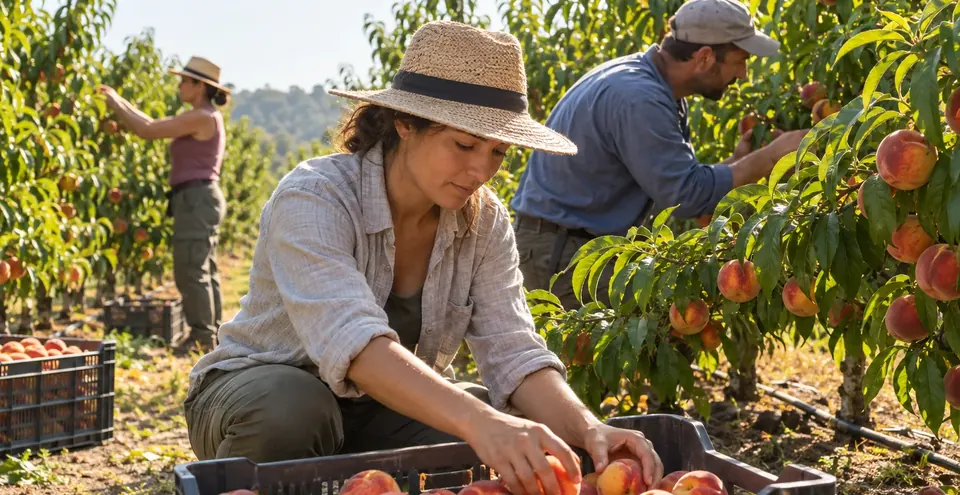
Moldova is a wine and orchard country, and seasonal fruit and vegetable picking is one of its most important kinds of temporary work. Vineyards cover the hills of Codru and the south-east, orchards of apples and plums spread across the north and centre, and vegetables and melons grow on the plains. Pickers cut, carry and sort produce during the harvest peaks, often in teams and sometimes with housing offered by the farm. Law, safety rules and cross-border conditions matter for foreign workers, so the details of contracts and pay deserve careful checking.
Fruit and vegetable picking in Moldova: crops, regions and calendar
Moldova's farmland is among its most valuable resources. Vineyards cover the hills of Codru and the south-east, orchards of apples and plums spread across the north and centre, and vegetables, melons and sunflowers grow on the plains around Cahul, Comrat and Bălți. Sweet cherries and apricots ripen in early summer, followed by plums, tomatoes and peppers in July and August, and grapes and apples dominate from September.
Each region has its signature. The north around Edineț and Briceni is known for apples, sugar beet and cereals, the centre for vines and walnuts, and the south for watermelons, tomatoes and late grapes. The Dniester and Prut valleys have fertile soils for vegetables, and market gardens supply Chișinău's open-air markets with fresh produce throughout the warm season.
| Month | Crop or task | Typical area |
|---|---|---|
| May to June | Strawberries, cherries, apricots | Centre and south |
| July to August | Plums, tomatoes, peppers, watermelons | Cahul, Orhei, Dniester valley |
| September to October | Grapes, apples, walnuts, late vegetables | Codru, north, south-east |
| October to November | Late apples, walnut sorting, cellar work | Orchards, packing houses |
Seasonal labour has a social dimension in Moldova. This affects the labour market, and growers now look for reliable pickers from other regions and, increasingly, from outside the country. Good workers who return each year can build lasting arrangements with a farm.
Tasks and working rhythm for seasonal picking jobs in Moldova
Grape harvest is the iconic task. Pickers cut bunches with secateurs, place them in crates or buckets and carry them to trailers, and the grapes must reach the winery quickly to protect quality. Hand harvesting is used for premium wines, while machines work in some large vineyards. Days are long during peak weeks, and sticky hands, bees and wasps are part of the experience.
Orchard work involves ladders, bags and bins. Apple pickers sort fruit by size and quality, and plum harvesters must avoid bruising, because plums are often sold fresh or dried into prunes, a traditional product. Walnut harvest, which follows in autumn, involves collecting nuts from the ground or shaking trees, then removing the green husks, which stain hands dark.
Vegetables demand stoop labour and care. Tomatoes and peppers are picked in baskets at the cooler times of day, melons are carried from the field to trucks, and cabbages and onions are lifted in autumn. Greenhouse work, available on a smaller scale, extends the season into winter. Fitness, stamina and a hat and sun protection are more important than formal qualifications.
Quality standards shape the work. Table grapes, apples for export and plums for drying must be picked at the right maturity, handled gently and sorted by size. Supervisors may reject damaged fruit, so attention to detail matters more than speed alone. Packing houses in the north and south sort, wash and pack the produce, and some hire temporary staff for conveyor and boxing tasks that are lighter than field work.
Pay, contracts and housing
Methods of payment vary. Large companies pay a daily or hourly wage, family farms may agree a sum per day, and some growers pay per crate or per kilogram. Piece rates reward speed but can be unfair to newcomers, so ask about typical daily earnings and whether the farm guarantees a minimum. The legal minimum wage can be checked with the Ministry of Labour and Social Protection.
Written contracts matter. A farm that registers workers pays social insurance contributions and gives the worker protection in case of illness or accident. Informal day labour is common, but it is risky, because there is no recourse if payment is delayed. Never hand over your passport, never pay for a place and keep records of days worked with the date and the foreman's name.
Housing arrangements range from rooms in a village house to simple dormitories near the farm. Moldova's villages are close to the fields, and many workers live at home and commute by minibus. If housing is provided, ask about water, heating at night in October, cooking facilities and the distance to a shop and clinic. Reliable transport to and from the orchard is a basic requirement.
Equipment is usually provided by the farm. Pickers receive crates, buckets, secateurs or bags, and ladders are shared among team members. Personal items such as gloves, hats, boots and rain jackets are the worker's responsibility, though some employers help. In vineyards, long sleeves protect against leaves and insects. Always check the condition of ladders and report damaged equipment, because falls from ladders are among the most common injuries in orchards.
Law, safety and cross-border facts for harvest work in Moldova
Foreign nationals need authorisation to work in Moldova, which is requested through the Bureau for Migration and Asylum and normally involves the employer. Tourist entry does not allow harvest work. Moldovan citizens have the benefit of the Labour Code, and the State Labour Inspectorate handles complaints. Agricultural workers should receive clear safety instructions, drinking water and rest breaks.
Chemical treatments are part of fruit and vine management. Pickers should not enter sprayed rows until the safe interval has passed and should wash hands and fruit before eating. Protective equipment must be provided to anyone mixing or applying products. Heat is a risk in August and early September, so work early, drink plenty of water and stop if you feel faint.
Transnistria, the strip along the left bank of the Dniester, is not administered by the central government, and legal rules and consular protection are different there. Anyone considering farm work in the region should ask for official advice from their embassy or consulate beforehand. The authorities in Chișinău can explain which areas are covered by Moldovan law and which are not.
Weather and logistics decide the pace. Rain stops picking of grapes and delicate fruit, and workers may be asked to come on a weekend to make up lost time. Hail and late frost can damage crops, reducing the volume of work in a district. Keep flexible plans, stay in contact with the farm manager and, if possible, line up a second employer to cover days when your main farm cannot offer work.
Plan the end of the season too. When the last grapes are in and the apples are stored, many workers want a reference letter, a settlement of unpaid wages and, if they are foreign, a clear end date for their authorisation. Ask the foreman or the owner for a short signed note describing your work, because good references from a Moldovan farm help when you apply to another employer in the country or abroad.
Frequently asked questions about picking work
When can I find the most work?
September and October, when grapes, apples and walnuts are ripe at the same time. Smaller peaks occur in June with cherries and in July and August with plums and tomatoes.
Moldova: do I need experience?
Not much. Most farms show newcomers how to cut grapes or pick fruit. Stamina and reliability count more, and experienced workers may be given leading roles or better paid tasks.
Can foreigners legally work on farms?
Yes, with the correct authorisation. The employer usually starts the process with the Bureau for Migration and Asylum, and you should not begin work until it is approved.
Official and legal references
- Government of the Republic of Moldova — The official government portal in English with information on laws, public services and rules concerning employment of foreigners.