Barbados: seasonal fruit and vegetable picking jobs on small farms and cane estates
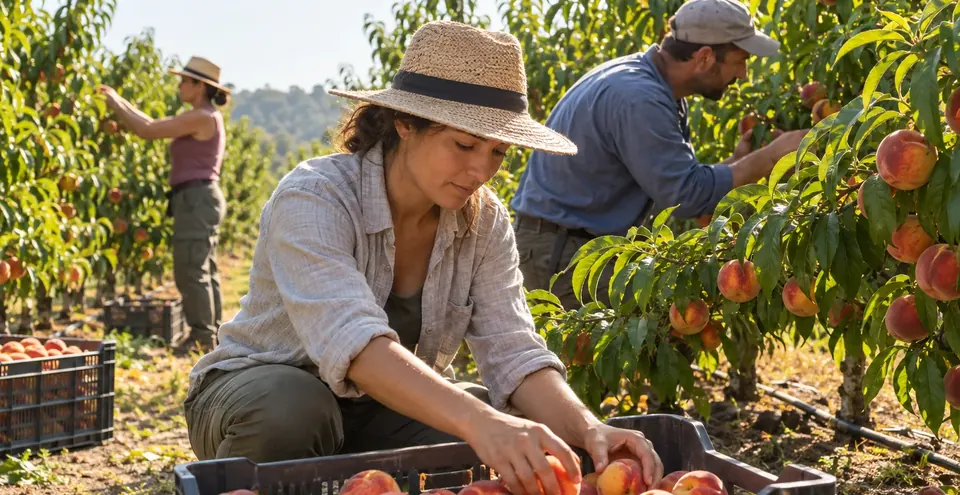
Barbados grows crops on a coral island whose soils range from rich earth on the plateau to thin ground along the coast, and seasonal fruit and vegetable picking jobs follow those patterns. Small farms and cane estates need hands for vegetables, root crops, tropical fruit and cut flowers, usually for short harvest periods. Pickers work outdoors in the sun and sell to local markets and hotels. Opportunities are limited and permits are required for non-citizens, so most harvest work stays with local labour.
Seasonal fruit and vegetable picking in Barbados: crops and cycles on a coral island
The soil of Barbados varies from the fertile red and black earth of the plateau to the thin, rocky ground along the coast. Most farms are in the parishes of Saint Philip, Christ Church, Saint George, Saint Andrew, Saint Joseph and Saint Lucy, where sugar cane covers wide fields and market gardens fill the gaps. Rain falls mostly between June and November, so irrigation matters in the dry months.
Root crops are the backbone of local diets. Sweet potatoes, yams, eddoes and cassava are dug and bagged for markets and supermarkets, and pumpkins, cabbages, tomatoes, cucumbers, lettuce and Scotch bonnet peppers are picked from small plots. Tree fruits include mango, soursop, guava, golden apple, breadfruit and the West Indian cherry, which many families harvest from their own yards.
Sugar cane is cut between roughly January and June in what is known as the crop season. Cutting is hard, hot and often mechanised on larger estates, and the cane goes to the Portvale factory in Saint James for processing. The end of harvest was historically celebrated with the festival now called Crop Over, a reminder of the crop's cultural weight.
Rainfall and irrigation shape the farm year more than temperature does. A dry spell in the early months can stunt vegetables, while heavy rain in the autumn can rot root crops in the ground. Many growers use drip lines and small reservoirs, and the demand for labour peaks when planting, weeding and harvesting have to be done quickly after a weather change.
Pests and diseases influence the work. Growers deal with insects that attack vegetables, fungal problems in wet weather and the pressure of fruit flies on mangoes. Labourers who can recognise early signs of damage, keep plots clean and handle produce carefully are valued because they help to protect the farmer's income.
| Crop | Typical period | Main tasks |
|---|---|---|
| Sugar cane | January to June | Cutting, loading, haulage to the factory |
| Sweet potato and yam | Late summer to winter | Digging, cleaning, bagging |
| Tomato, cucumber, pepper | Mostly the drier months | Picking, grading, packing |
| Mango and other tree fruit | Early summer | Picking, sorting, carrying |
How the work is done
Tasks include digging, picking, cutting, washing, sorting and packing, together with weeding, planting and irrigating. Days start early, usually at six, to avoid the strongest heat, and finish around midday. The work is physically hard and exposes workers to sun, insects and sharp leaves, so sturdy clothing and water are essential.
Pay is normally agreed by the day or by the task, and rates differ by crop and farm. There is no single scale for pickers, so confirm the amount, the days and the method of payment before starting. Workers on larger estates are more likely to have a regular contract and payslips than those who help on small plots. Safety needs attention. Ask whether pesticides are used, never handle them without training and protective equipment, and keep out of fields that have been recently sprayed. Report injuries and illnesses, and take breaks in the shade.
Grading and packing are part of the day. Hotels, supermarkets and exporters expect uniform size and quality, so workers learn to sort by size, colour and condition, remove damaged items, and pack produce into crates or bags without bruising. A slow, careful picker who keeps quality high is often preferred to a fast one who damages the crop.
Farmers' organisations and markets
The Barbados Agricultural Society represents farmers and supports training and marketing, and the Barbados Agricultural Management Company manages state-owned estates and the sugar industry. The Ministry of Agriculture provides extension services and advice. Produce is sold at the Cheapside Market in Bridgetown, at roadside stands and at supermarkets, and hotels buy local vegetables when quality and supply allow.
Interest in protected cultivation has grown. Greenhouses and hydroponic units produce lettuce, peppers and herbs with less land and water, and they offer steadier work with fixed hours. These businesses value people who understand plant care, hygiene and packing for demanding customers. Praedial larceny, the theft of crops and livestock, is a known problem, and farmers sometimes hire watchers. Workers should expect to follow security rules, and anyone leaving the farm with produce should have permission to avoid misunderstanding.
Fishing is closely linked to the farm economy. Flying fish, dolphinfish and tuna are landed at Oistins, Bridgetown and Speightstown, and some families alternate between crops and the sea according to the season. Anyone seeking day work in agriculture should therefore also ask at fish markets, where cleaning, loading and selling jobs are frequently available.
Permits, housing and legal protections when taking up seasonal farm work in Barbados
Non-nationals need a work permit for agricultural jobs, and approvals for unskilled field labour are rare, since local workers are available. Residents and citizens can work freely. Those who are offered a job on a farm should check that the contract respects the minimum wage and hours rules of the Employment Rights Act.
Farms do not normally supply housing, because the island is small enough for most workers to live at home and travel by bus or lift. The Scotland District and Saint Lucy have limited public transport, so arrange rides or a place to stay nearby.
The National Insurance Scheme covers employees, and self-employed workers may register separately. In an accident, ask the employer to record it, and seek medical care promptly. A union or the Labour Department can advise if the employer refuses to cooperate.
Women make up a large share of those who sell vegetables and fruit, and they have long been central to the market trade in Barbados. Casual helpers may be asked to weigh, pack and sell produce rather than pick it, and these tasks suit people who prefer less strenuous work but can handle customers and money honestly.
Small-scale processing offers another route. Pepper sauce makers, jam and juice producers and bakers who use local breadfruit, cassava or sweet potato hire part-time helpers for peeling, bottling and packing, particularly before Christmas and the festival season, and these jobs are less tiring than field work.
Frequently asked questions about seasonal farm work in Barbados
Barbados: is there a fruit-picking season for visitors?
No formal season exists for visitors, and work permits for farm labour are unlikely. Mango time and the cane crop bring extra work, but it goes mostly to local people with existing relationships with farmers. Farmers are more likely to hire a neighbour or relative than a stranger, so contacts in the parish count for a great deal.
What does sugar cane work involve?
Cutters, loaders and drivers operate during the crop season, and mechanisation has reduced hand cutting. The work is hot, hard and tied to the estate's schedule. Anyone interested should contact the agricultural management company or the farm directly. Heat, long hours and heavy tools mean that workers must be fit, and safety boots and gloves are essential equipment.
How can I learn more about farming on the island?
Visit the Cheapside Market, speak with farmers at roadside stalls and contact the Barbados Agricultural Society. Workshops, field days and training courses are advertised through the Ministry of Agriculture and local media. Farmers are usually proud of their crops and happy to explain how the seasons and the rainfall decide what they plant.
Where to find these jobs
- Barbados Agricultural Management Company — State-owned company that manages sugar estates and agricultural lands, and employs field workers during the cane crop season.
- Ministry of Agriculture and Food Security, Barbados — Government ministry that provides extension services, regulation and support to farmers, and information on crops and production.
- Ministry of Labour, Barbados — Government ministry that oversees labour standards and advises agricultural and other workers on contracts, wages and complaints.
Official and legal references
- Government of Barbados — Official government portal with ministries, laws and services, including agriculture, labour and immigration information for residents and businesses.
- Food and Agriculture Organization of the United Nations — United Nations agency publishing English-language information on agriculture, food security and rural livelihoods in Caribbean countries.