Serbia: seasonal fruit and vegetable picking jobs in raspberry fields, plum orchards, vineyards and pepper plots
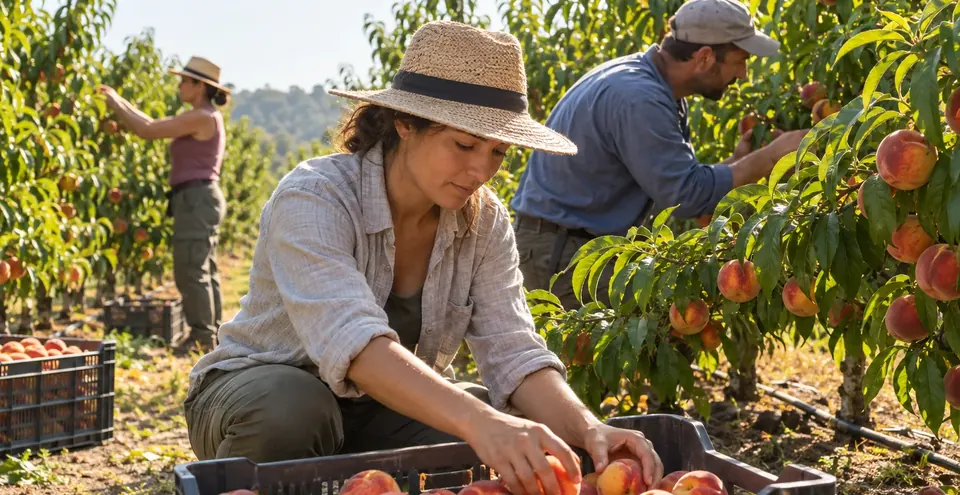
Serbia offers seasonal fruit and vegetable picking work from May, when strawberries and cherries ripen on the hills of Sumadija and Pomoravlje, through to the plum and pepper harvests at summer's end. Raspberries dominate June and July, and market gardens beside the Danube and Tisa provide early vegetables. This harvest labour is physically demanding, paid by the hour or by the weight picked, and often combined with simple lodging on the farm. Applicants should understand the legal framework, safety basics and recognised ways of finding a place before leaving home.
Serbia seasonal fruit and vegetable picking: what is picked, where and when
The season opens in May with strawberries and cherries in the hills of Sumadija and Pomoravlje, followed by early vegetables in the market gardens along the Danube and Tisa rivers. Raspberries then dominate June and July in the municipalities of Arilje, Ivanjica, Priboj and Valjevo, where hillside plots are tended by families and hired pickers working with small plastic punnets.
Late summer is plum season. The varieties used for rakija and dried prunes ripen from August in Macva, Sumadija and around Sabac, Loznica and Valjevo, and orchards use ladders, shaking and hand picking depending on the plot. Peppers for roasting are harvested in Leskovac and the Jablanica district from August to October, and tomatoes, cabbage and onions are gathered in Banat and Backa for the market and for processing.
Autumn belongs to apples, pears, walnuts and grapes. The vineyards of Fruska Gora, Vrsac, Zupa near Aleksandrovac and the Negotin region start harvesting in September, with wine cellars in Sremski Karlovci and Irig hiring helpers for the press. Quinces and late apples are picked in October, and potato and sugar beet fields, though mechanised, still need workers for loading and sorting at the end of the year.
| Month | Main crop | Typical area |
|---|---|---|
| May to June | Strawberries, cherries, early vegetables | Sumadija, Pomoravlje, Vojvodina |
| June to July | Raspberries, blackberries | Arilje, Ivanjica, Valjevo |
| August to September | Plums, peppers, tomatoes | Macva, Leskovac, Banat |
| September to October | Grapes, apples, pears, walnuts | Fruska Gora, Zupa, Negotin |
Work rhythm and physical demands for seasonal fruit and vegetable picking in Serbia
Days in the raspberry fields begin at dawn, because the fruit is fragile and must be delivered cool to the collection point. Pickers walk along narrow rows, take only fully ripe berries and place them into small containers without crushing them. By mid-morning the sun and the heat of the slopes make the work heavy, and the day often ends before the hottest hours.
Plum and apple harvests require different skills. Pickers climb ladders, hold baskets on their hips and move crates to a tractor trailer, so balance and strength matter. Vineyard work involves bending over low vines and cutting bunches with scissors, then carrying heavy buckets. Pepper picking is done in rows under the sun and demands patience, since the plants are close to the ground.
Quality control is strict, because buyers and cold storage firms reject damaged fruit. A supervisor will often show new workers how to recognise the ripe colour and how to handle each variety. Wet weather delays picking and sometimes cancels days, which affects income. Gloves are useful for plums and walnuts, while a hat and light long sleeves protect against sun and insects. Wear layered clothing, because mornings in hilly areas are cool, and keep water and a simple snack with you. Between crops, short gaps appear, so many pickers follow the harvest from berries to plums to grapes, staying with a group or a trusted contractor and noting each stage in a small notebook.
Pay, lodging and safety
Raspberry pickers are often paid per kilogram, which makes weighing the most important moment of the day. Ask for the rate before starting, observe the scale and keep a personal record. In plum, apple and vegetable work, daily pay is more usual, and some growers give a bonus to people who stay until the last day of the harvest. The rate should respect the legal minimum wage when converted to an hourly figure, and the employer should pay on the agreed date.
Many local workers return home each evening, but farms hire from farther away and may provide simple lodging in a family house, a barn annex or a rented room. Check the conditions, beds, water, toilets and who pays for food. Transport by tractor or van is common in villages, and there should be insurance against accidents. Never leave your passport or identity card with the farmer.
Safety instructions cover ladders, hot weather, sharp tools and treated plants. Workers should know when sprays were applied and wait the required time before entering a plot. Drinking water and shade are basic needs. Accidents are reported to the employer and the health centre, and the seasonal engagement system ensures that the worker is registered for insurance during the days of work.
Health matters in the heat. Heat stroke, dehydration, insect bites and allergies to pollen are the most common problems. Bring any personal medication, know the location of the nearest health centre in Arilje, Valjevo or Leskovac, and tell the supervisor if you feel unwell. A responsible grower lets people rest in the shade and does not push workers to continue when they are sick.
Legal framework and ways to find work for seasonal farm work in Serbia
A law on simplified engagement for seasonal work allows farms to hire people for short periods in agriculture, forestry and some other activities through a simplified procedure. The engagement is recorded, and tax and contribution payments are calculated in an easy way. Ask whether the farmer uses this procedure, since it protects you if you are injured or later need proof of employment.
Foreign nationals need a work permit linked to residence, and seasonal permits in agriculture may be available in limited cases. The farm cannot simply hire someone arriving on a visit. Requirements change, so ask the National Employment Service and the foreigners' office of the police before travelling. Serbian citizens can start immediately when registered, subject to the minimum age and health rules.
Look for work through the employment service, municipal agricultural offices and cooperatives, and ask at village markets in Arilje, Valjevo, Sabac and Leskovac. Fruit associations publish calls for pickers in June and August. Online groups exist, but be cautious: confirm the identity of the farmer, the exact location and the conditions before paying for travel or accepting a ride to a remote plot.
Questions about harvest work in Serbia
When is the busiest time for fruit picking?
June and July are the peak for raspberries and cherries, while August and September are the busiest for plums, peppers and the start of the grape harvest. October closes the main season with apples and late vineyards. Contact growers a month before each peak, because many farms form their teams from the same families and acquaintances each year.
Serbia: do I need experience?
Not usually. Farmers prefer people who are reliable and willing to learn, and the first day is normally a trial in which a supervisor shows how to pick and handle fruit. Physical fitness is more important than knowledge, though experience in earlier harvests gives you better chances of a place in a good team with a fair rate.
How do I get paid fairly?
Agree on the rate and the payment date before the first shift, ask for the weighing to be done in front of you and keep your own notes. If you are engaged under the seasonal engagement procedure, the employer must pay taxes and contributions. In case of a dispute, speak to the labour inspectorate or the municipal agricultural office, and keep messages, receipts and photographs of the records.
Where to find these jobs
- Chamber of Commerce and Industry of Serbia — Business association that represents employers in agriculture, food processing and trade and offers information to companies.
Official and legal references
- Government of the Republic of Serbia — Official government portal with information on administrative procedures, public services and national institutions of Serbia in English.
- Ministry of Foreign Affairs of Serbia — Official ministry site in English with consular guidance and information on visas, permits and entry rules for foreign nationals.